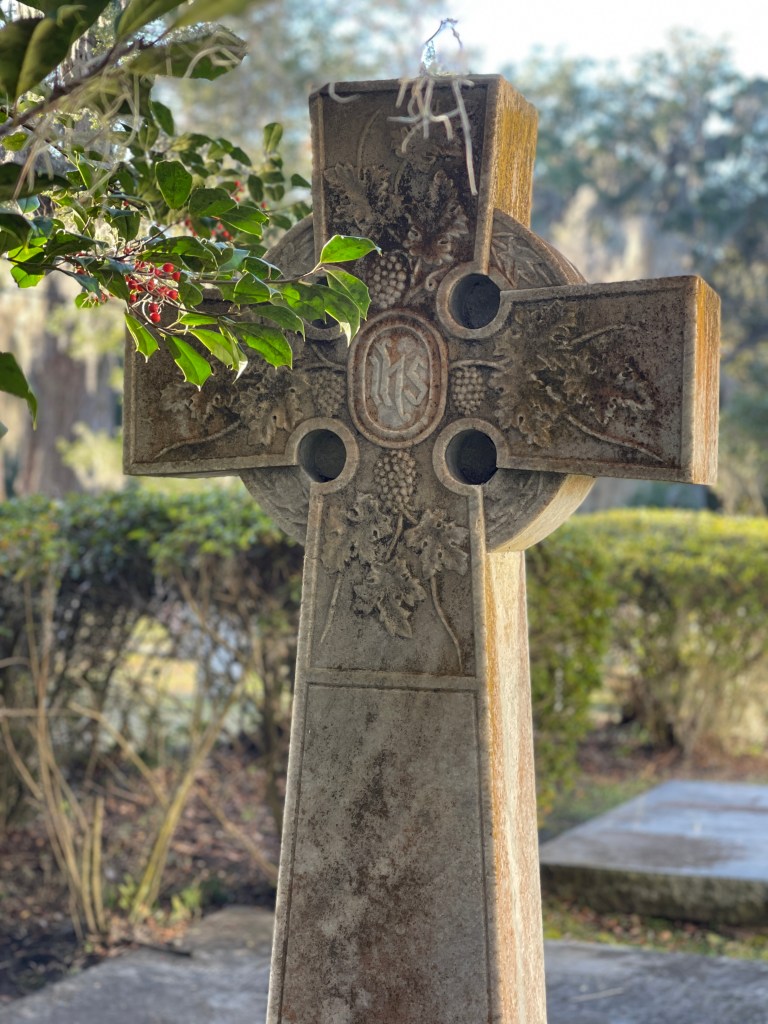

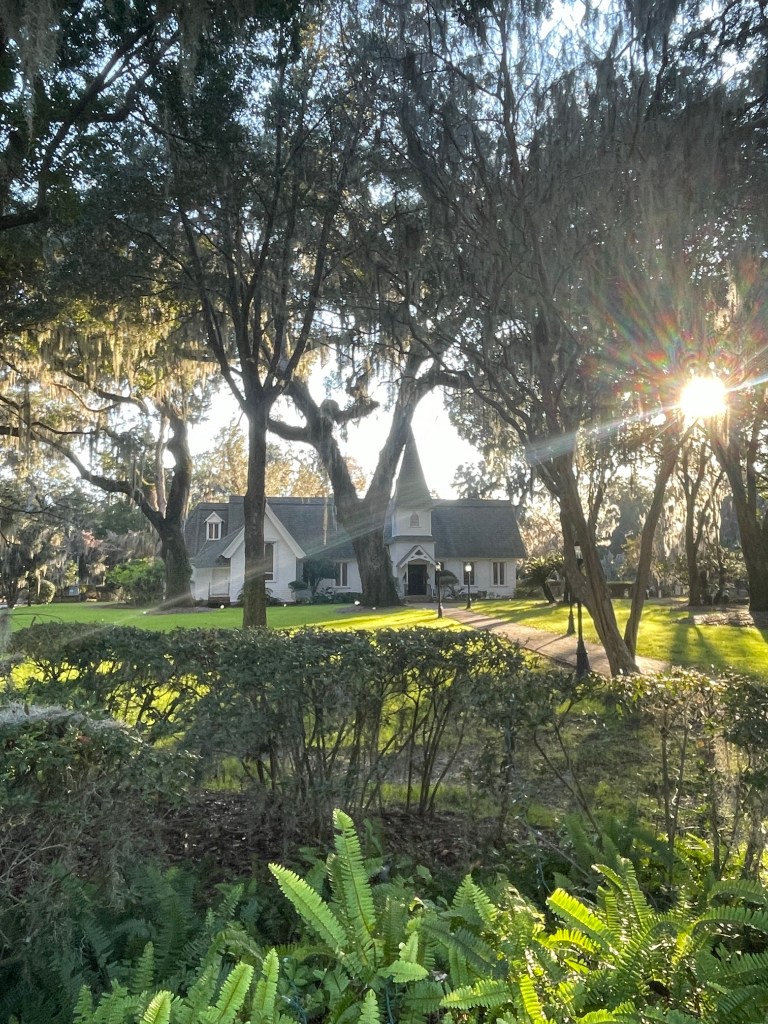


As you can tell by the signs, Christ Church has quite the history of a political/religious/societal bent, and, well, the spooky too! When I was a youngin’ I lived on the Island for a time with my Grandparents, and then in my mid-20’s I moved back to work on Sea Island and live over near the Coast Guard Station. During those years I often heard stories about the history of church including a number of ghost stories. But the latter is a post for another time that I can’t wait to share with you. For now, let’s chat church and cemetery!
Here’s a summary of how the church came to be:
On February 15, 1736, James Oglethorpe, founder of the Province of Georgia, established the town and fort of Frederica on St. Simons Island. Accompanying him was Reverend Charles Wesley, a priest within the Church of England who served as Oglethorpe’s chaplain and was the brother of John Wesley, then-priest of Christ Church in Savannah, Georgia. Charles would hold religious service in a tabby structure on the island, serving in this missionary capacity until July of that year.
In 1862, this building fell to ruins, as a result of the American Civil War.
Following this, lay preachers and occasional visiting clergy held services until 1879, when Anson Greene Phelps Dodge Jr. reorganized the parish. In 1884, Dodge had the church rebuilt on the site of the previous building as a memorial to his wife. Her remains lay on the church grounds. This structure still stands as the church’s current place of worship. In 1886, Dodge established St. Ignatius as an outreach for freed slaves on the island.
He left an endowment for the diocese that funded much of the diocese’s missionary work at that time. Anna Alexander served as deaconess of St. Ignatius, in doing so becoming the first black deaconess in the Episcopal Church. In 1998, she was named a saint by the diocese and in 2018 added to the Episcopal Church’s calendar of saints. – source

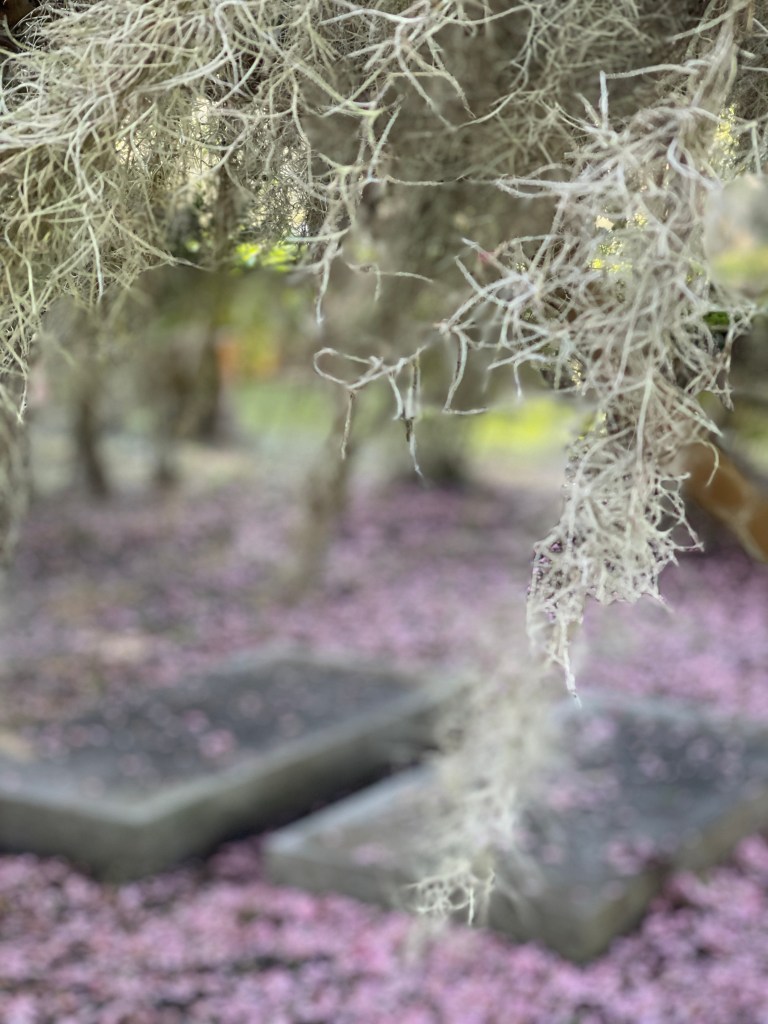
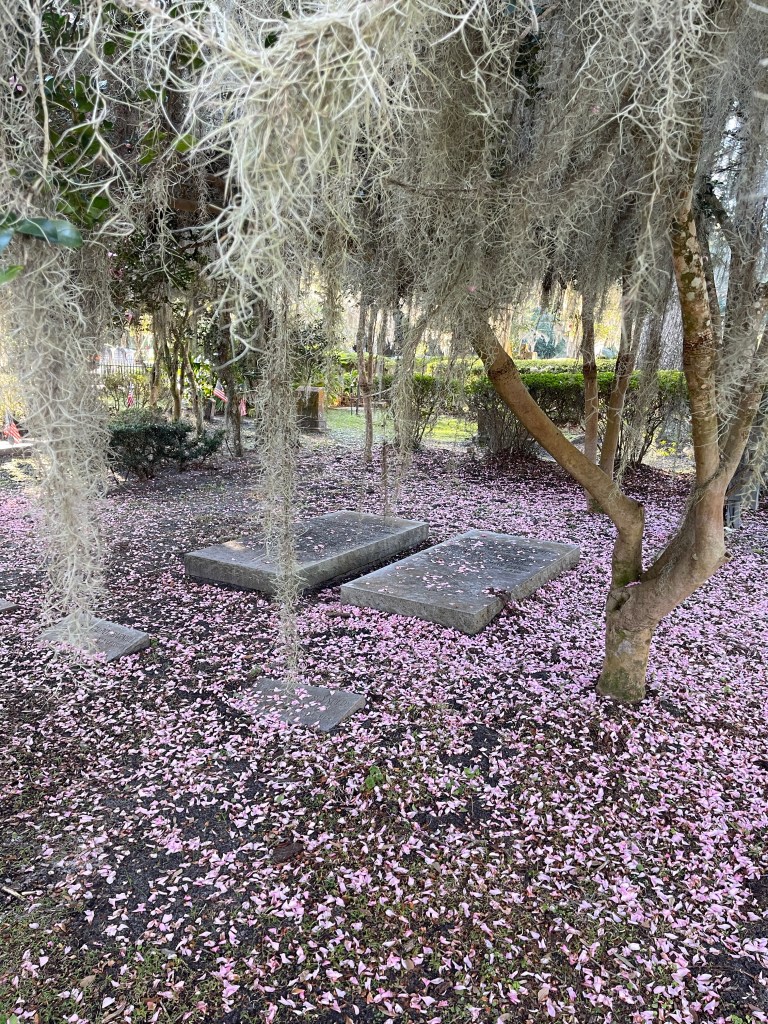

The church still holds services and the cemetery still sees a small number of burials every year. The grounds, in my opinion, are lovely even during the winter months (which is when I went) but especially in the springtime. Oh, the spring there really shows off…
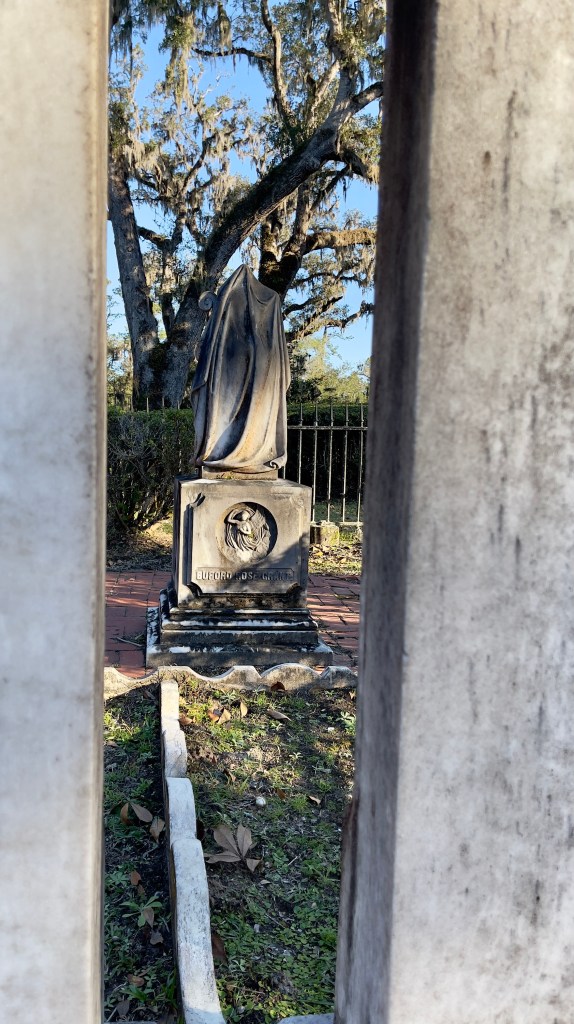
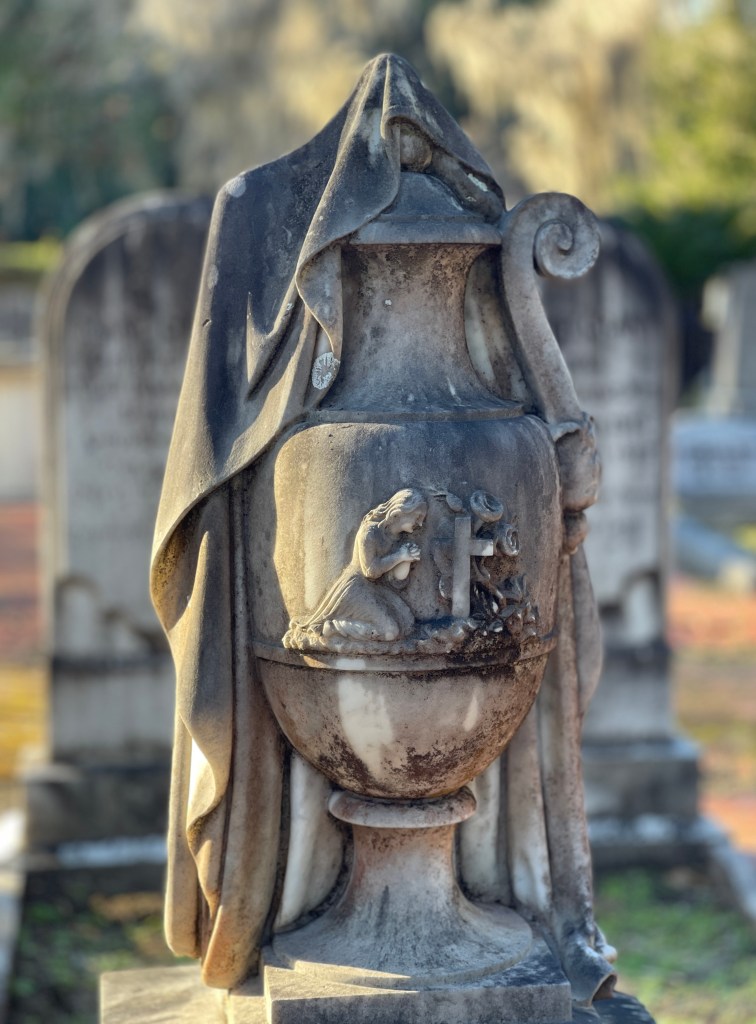
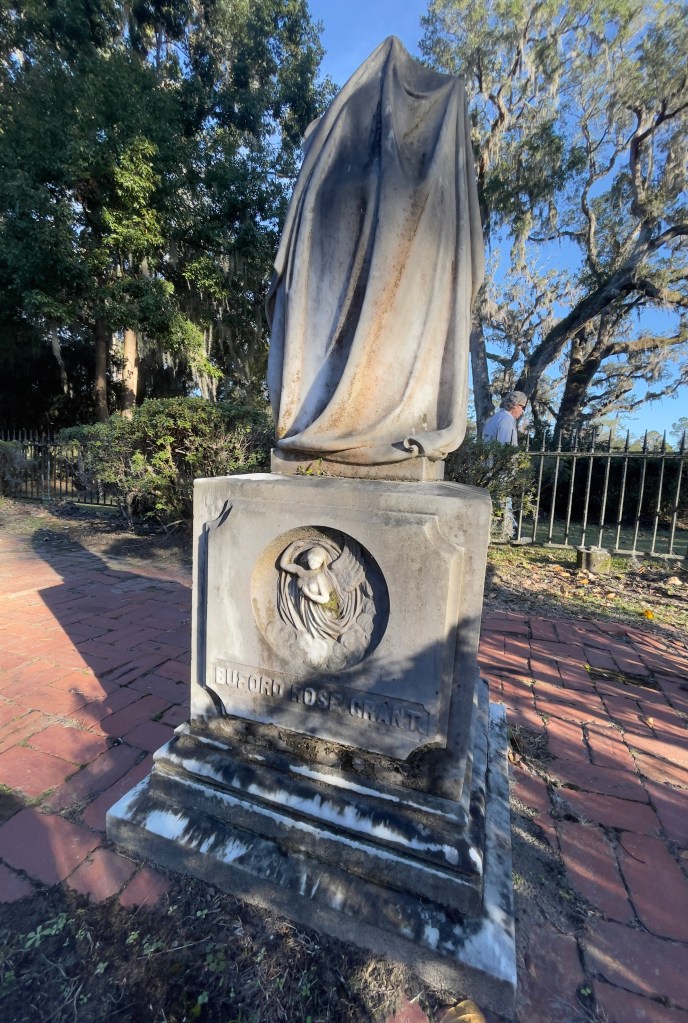

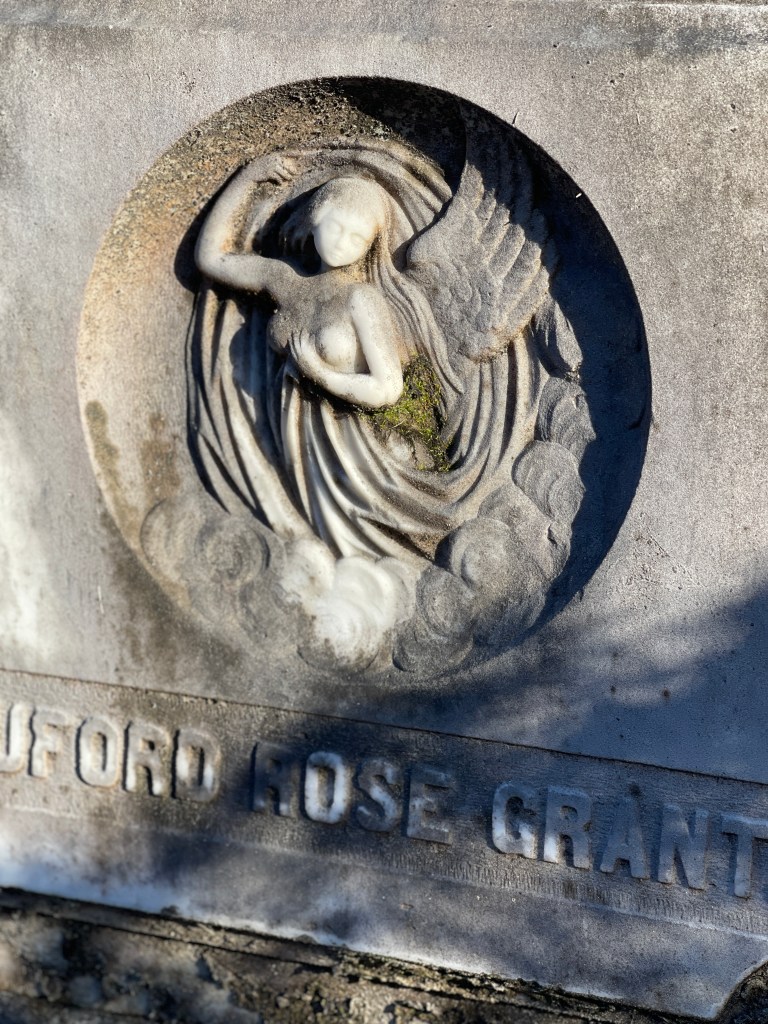
And of course there’s the stunning variety of funerary art including this multi-sided gravestone with a number of carvings and a plethora of minute details…


For a bit of a particular history, I searched for this 1920’s sculpture of Boy with Thorn, also known as Spinario, that was placed under an oak near the graves of Howard E. Coffin and his wife Matilda.
Howard was a pioneer in the automobile industry and became a millionaire at a young age, and with that money he purchased land in the Golden Isles – on Sapelo Island, Saint Simons Island and Sea Island. And with that he built an empire based on luxury tourism that had presidents, dignitaries, the rich, the famous and the adventurous making their way to the tiny coastal islands to take in the sunshine.
Howard Coffin eventually retired from automotive works, became involved in the farming of pine trees for pulpwood (that move also changed the landscape of the area both literally and figuratively), helped create what is now the commercial aviation program, and much more.
Coffin died at 64 years of age under what is considered maybe mysterious and suspicious circumstances…at least according to some. He was found with a gunshot wound to the head with his ‘hair trigger’ rifle nearby. Deemed an accident by family and friends, the coroner’s final say was inconclusive.
Howard E. Coffin was buried next to his first wife Matilda. It’s said this his funeral procession was the longest ever seen on Saint Simons Island…
The Cloister on Sea Island is still considered one of the premier resorts of the USA but the family sold the business in 2008 due to financial strain. The Coffin mansion and land on Sapelo now belong to the state.
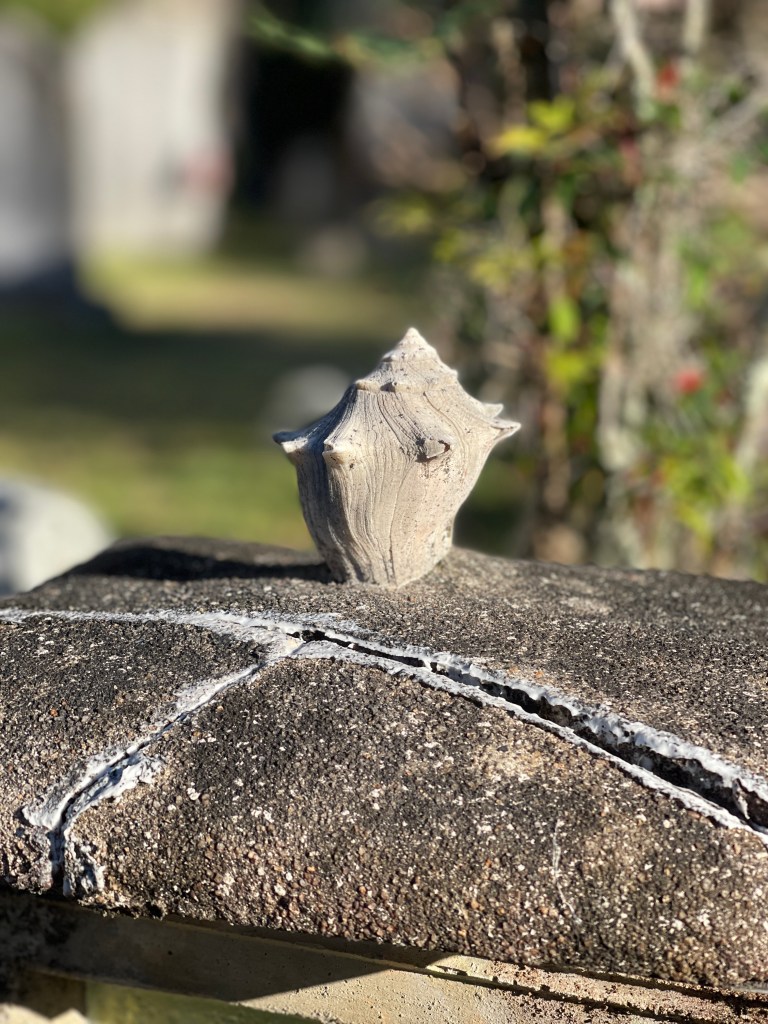
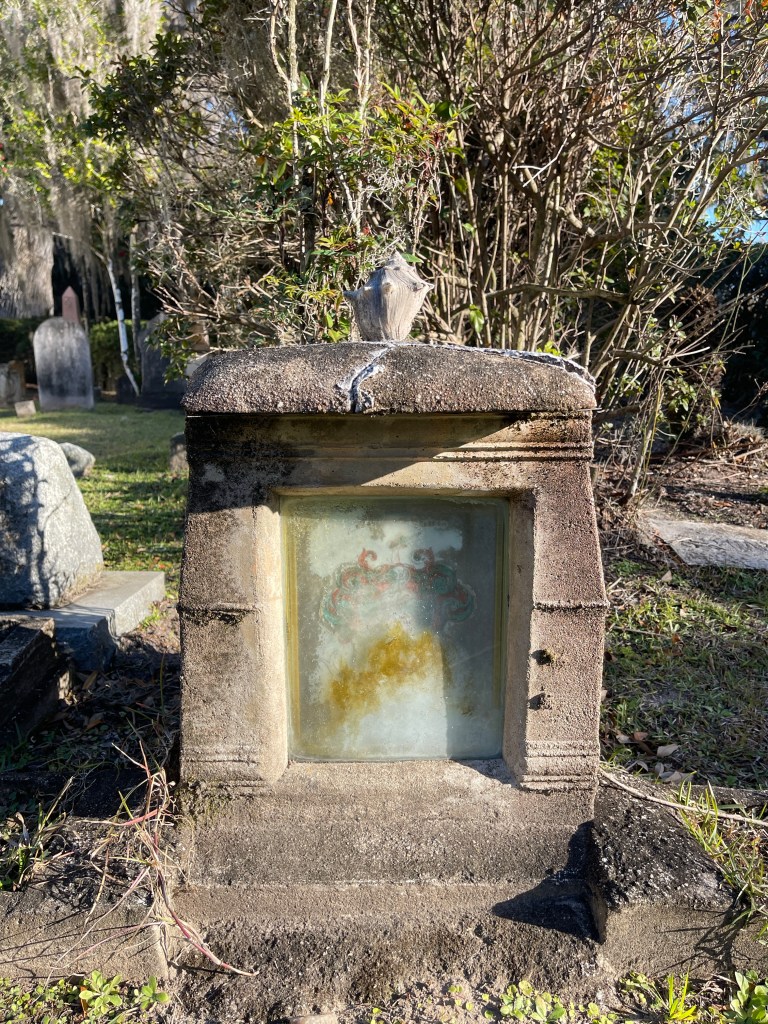
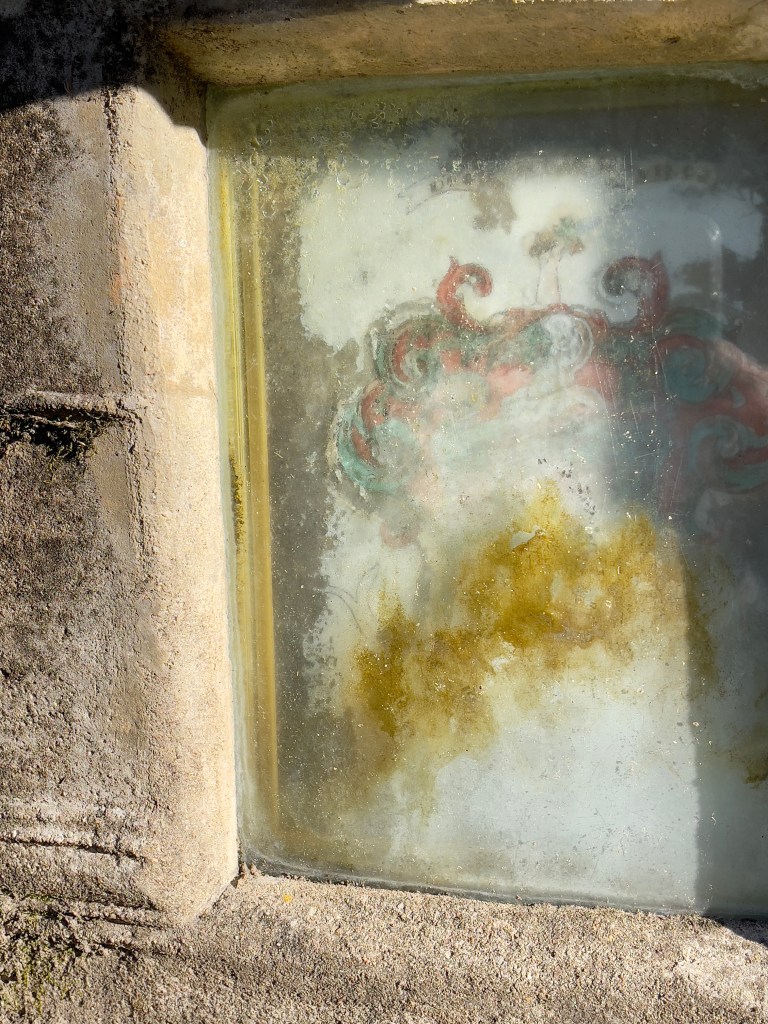

While ornate details and lots o’money are all well and good, let it be said that a handmade grave with a faded picture behind cloudy glass and a seashell adorning the top is pretty darn cool. This grave (person unknown to me) has some character doesn’t it? I have to say that folk/vernacular styling is one of my favorites…
If you want to see more of the interesting rural and historic sites/sights of coastal Georgia then I recommend Abandoned Coastal Georgia’s instagram and book. I’m hoping to find the tile graves they featured in the Glynn County (the mainland of the area) on one of my next trips.
