My first trip to Knoxville was a blast, and as I mentioned in a prior post, I got to see Lyle Lovett (a favorite of mine and it was in honor of one of my friends who passed last year – miss you bunches Zach), a plethora of historic sculptures, some used bookstores where I found so many awesome tomes, a biscuit spot that had a most charming proprietor and the iconic 1982 World’s Fair Sunsphere. Oh and SURPRISE! I visited some cemeteries. Ha!
Old Gray Cemetery is not named after the Confederacy and there are more Union soldiers buried here than any others. The eastern part of Tennessee had a higher percentage of people who were anti-secession than anywhere else in the state at 2-to-1 against. That’s evident in memorials such as the National Cemetery next door which has a Union Soldier Monument – a stark and welcome contrast to the many Confederate soldier statues/monuments you’ll still find on most small town squares and historic places…
Here are some of the notable graves I found during my time exploring the cemetery. Only scratching the surface here but I’ll include a few links at the end of the post so you can read more on the area. Including a ghost story about The Woman in White!
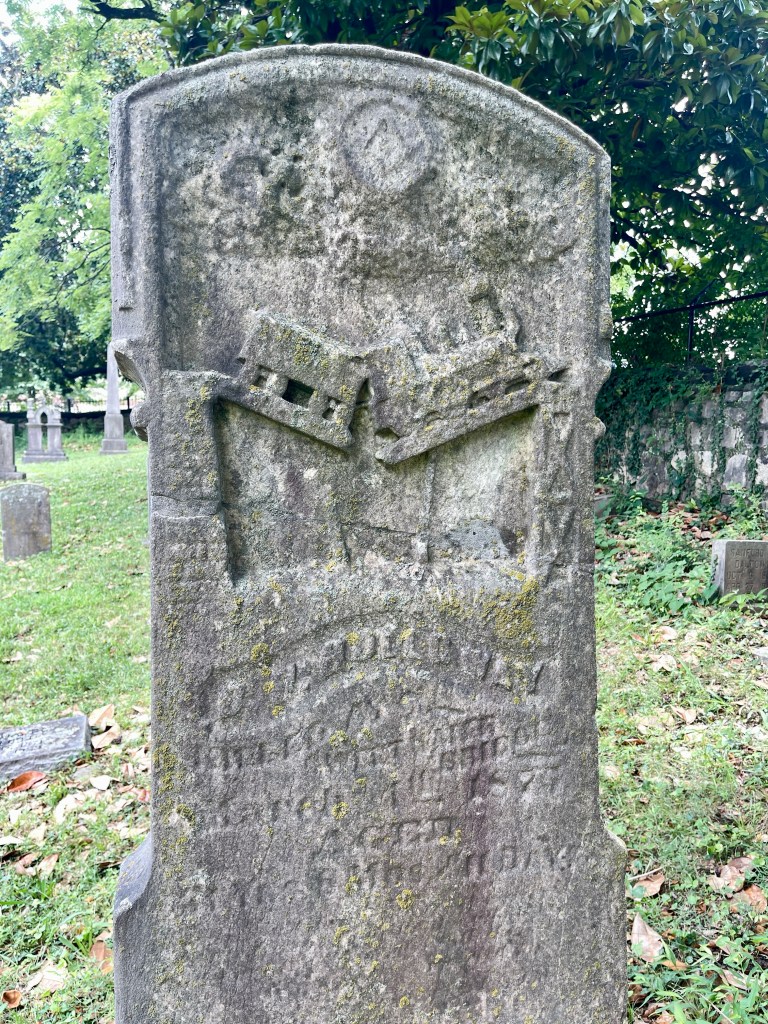

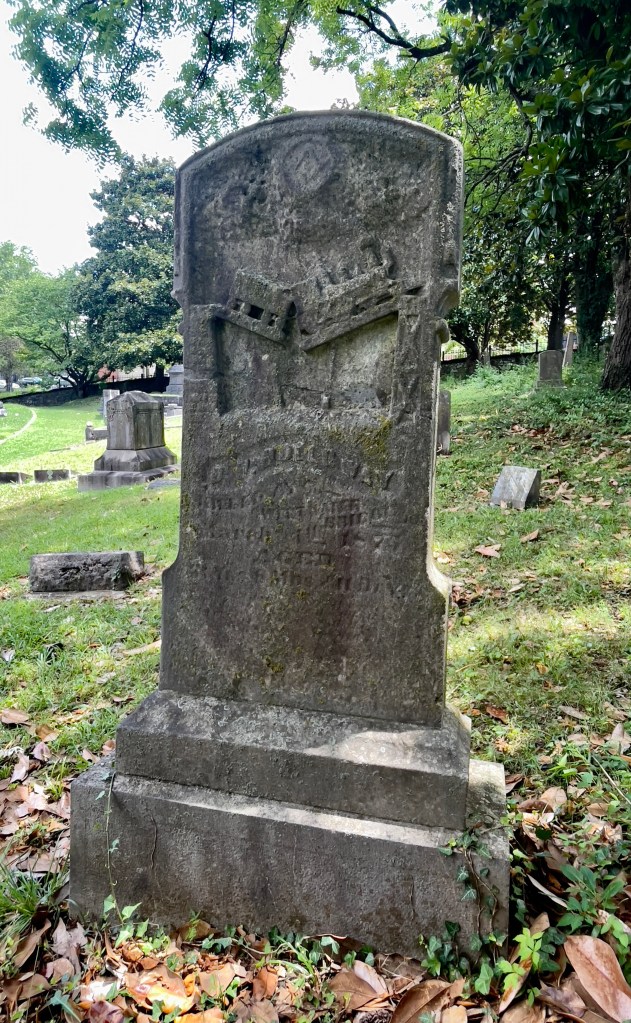
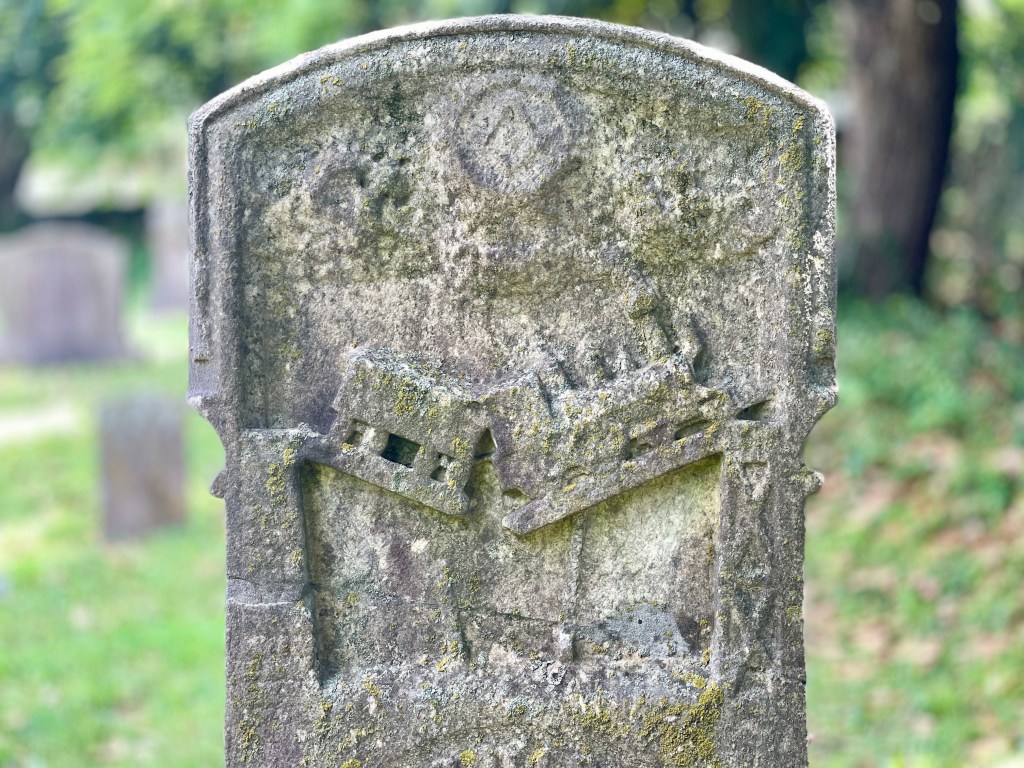
There are many local notables buried here with lovely gravestones but this one carved with a trainwreck is definitely the most discussed oddity in the place. The D.H. Holloway grave is inscribed Killed at Sweetwater Bridge, March 4th, 1875 and then features the very act that took his life.
There was another trainwreck nearby in 1904 but this one took more than one person’s life. The New Market train catastrophe claimed over 50 lives (some say over 100) and injured scores more. Many of the victims are buried here at Old Gray.
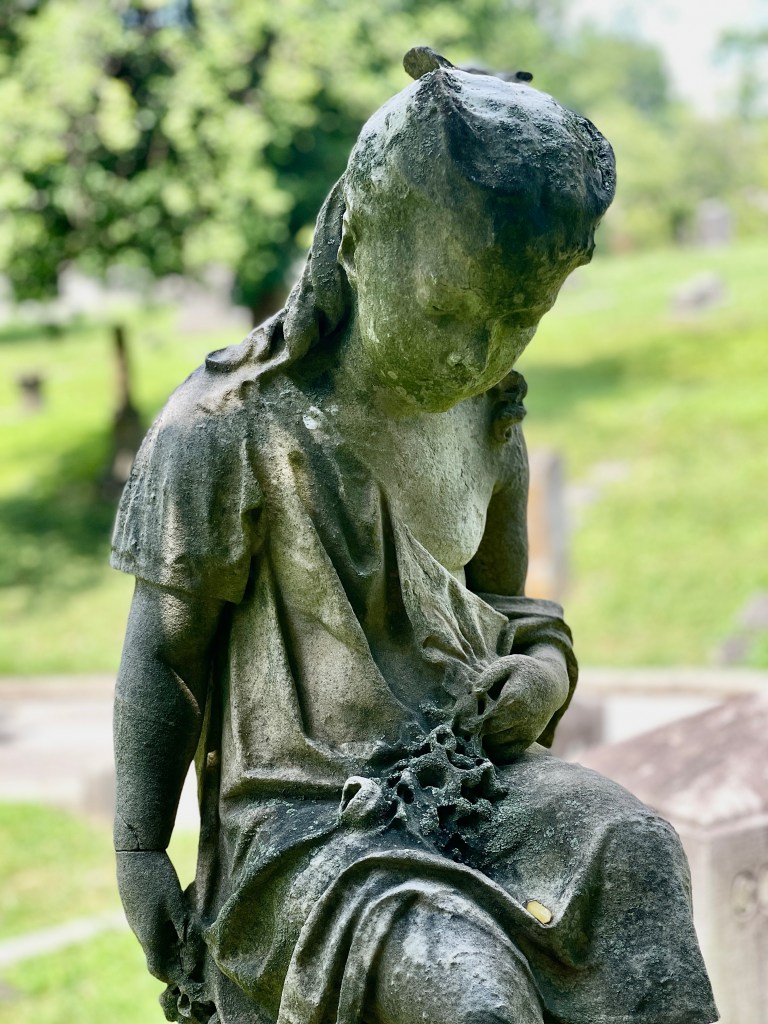


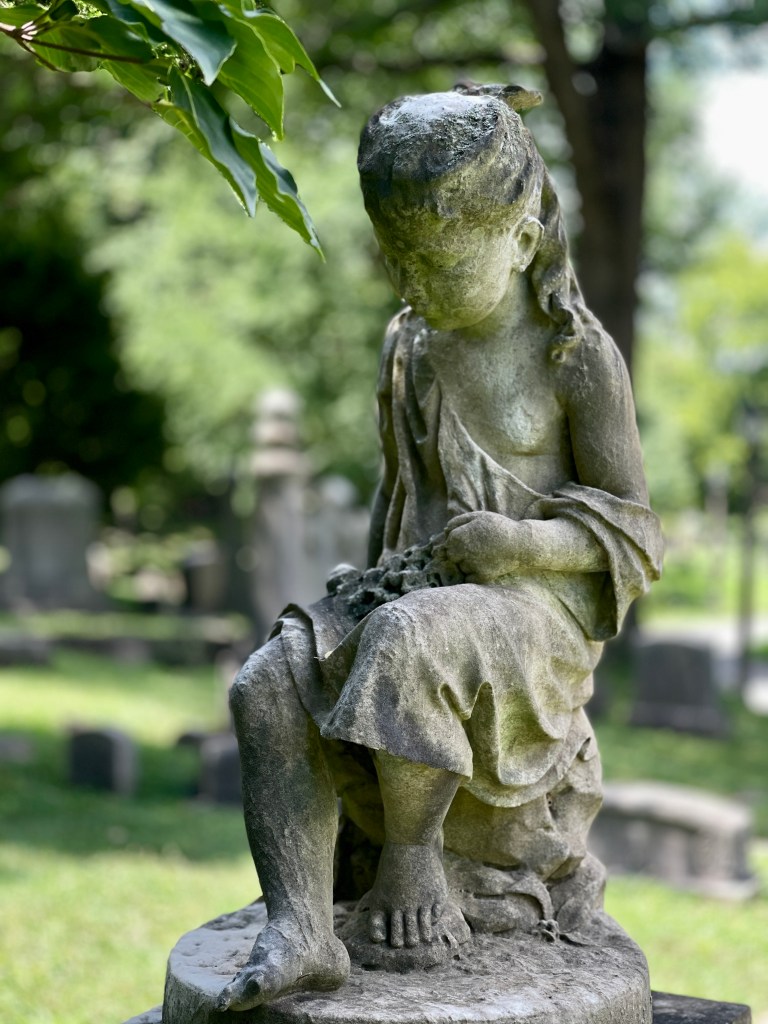
Lillien Gaines died at 7 years old and her gravesite receives lots of visitors and gifts. There were fresh flowers on the ground behind her statue and someone had left a small crystal in her lap.
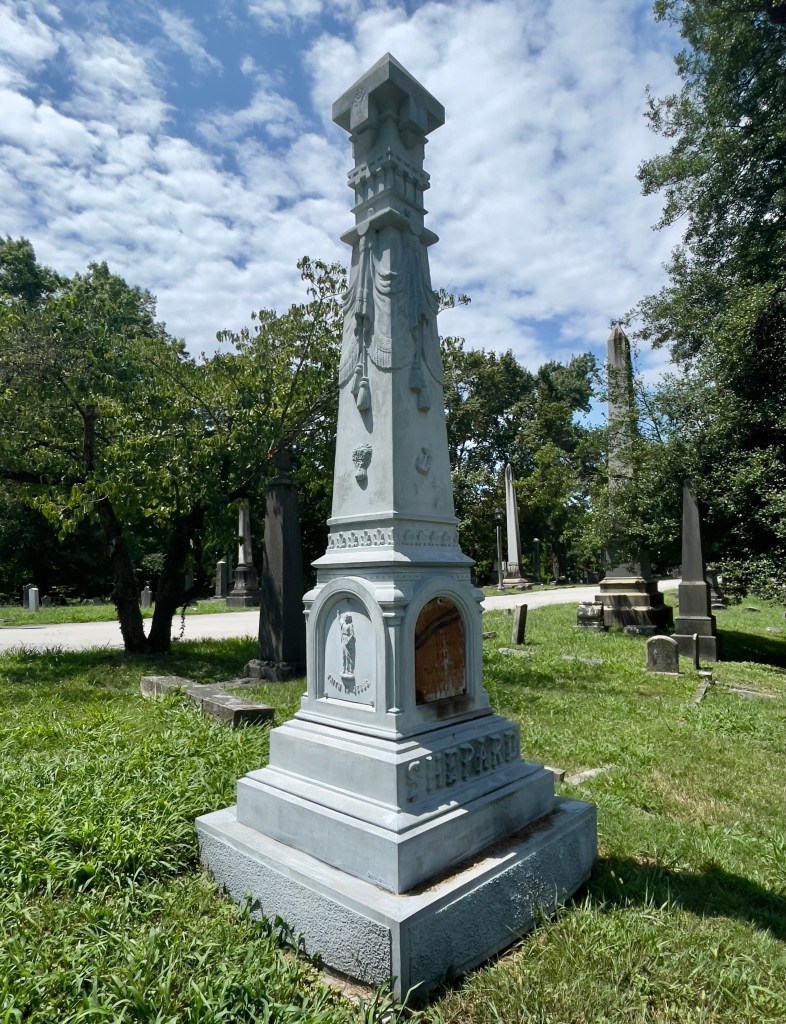

The zinkie of Lazarus C. Shepard has a story about bootleggers and prohibition attached. Not uncommon for these monuments but with this grave I found it documented in writing! Also, it appears that someone tried to spruce up the metal with some kind of ‘wash’ that left brush marks.

Lizzie French was an outspoken suffragist and a part of first wave feminism in Knoxville. There are a ton of articles out there that expound upon her work and the local history museum has a permanent display that features a focus on her life and the suffragist movement as a whole.
I wish I could say ‘Fellow Citizens,’ but since I am not accepted as a citizen by the government, I must say ‘Citizens and Fellow Servants. – Elizabeth Crozier French to the Tennessee Bar Association, 1912
If you want to know more about the cemetery:
Annnnndddd The Woman in White
