Lately I’ve had lots of people ask me questions about the do’s and don’ts of cemetery exploring. Why? Because it’s October of course! Folks want to go out into the cooler weather and amble/ramble around some old tombstones. And I love that for them!
I also appreciate it when people want to make sure that their visit to the cemetery is kind and considerate. That what they’re doing is not irreverent or harmful to the environment or, in some cases, not courting mischief with spirits.
With all of this in mind, I decided to make a brief-and-no-way exhaustive-or-100%-the-right-way-to-do-things beginner’s guide for tombstone tourists.*
The Basics
I learned a while ago that slogging through rainy, buggy cemeteries without cell service or showing up to a spot that has locked gates happens more often than you would think. So I like to mention the following tips:
- Check the hours, address and contact for the cemetery
- Download your route (rural cemeteries are often located in low/no cell zones) and bring any detailed maps (lots of places have maps on their website that you can download for free)
- Be prepared to pivot – hours can change with the seasons, places unexpectedly close to the public, there might be an active funeral, etc.
- Fully charge your phone, camera & other devices
- Check the weather – thunderstorms & heat are always a concern in the South
- Don’t forget your sunscreen, bug spray & a small first aid kit
Be Our Guest!
While cemetery tourism is a growing movement and many cemeteries encourage folks to stop by and explore, it’s important to remember that you are still a guest in the land of those gone before…
Whether you’re there to find a famous figure, in search of history and art or just want to explore a quiet green space, these are important reminders to ensure your experience is both engaging and respectful.*
See The Signs? Follow Those Rules!
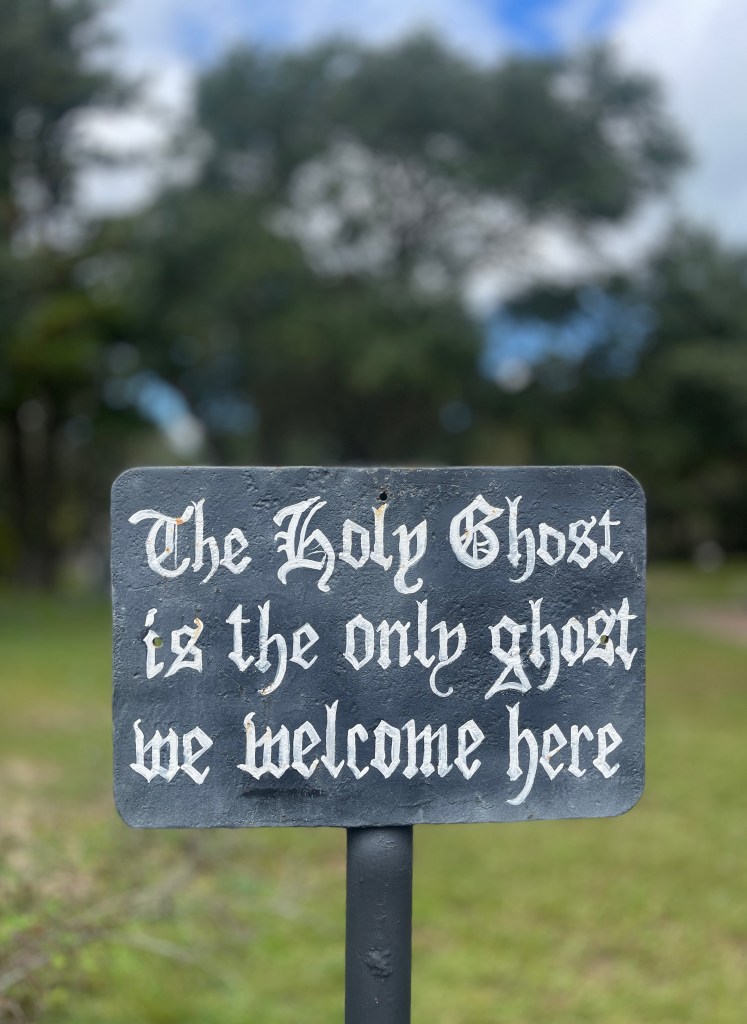
This is the most important thing you can do when visiting a cemetery. Rule #1 of Cemetery Club, y’all! Please adhere to any and all directions posted. If you don’t, then you’re gravely mistaken.
Wrangle Your Kids & Critters
Most cemeteries won’t allow pets but some spots, like Oakland Cemetery in Atlanta, are more welcoming. If you can bring your dog/cat/whatever, be sure to clean up after them and don’t let them chase wildlife or trample plants or step on graves.
The same rules apply to kids too! It’s also important to remember that stones fall over, there’s rusty metal lurking about and there’s lots of other hidden dangers that can do damage to the littles.
Practice Mindful Photography
Oh, I love to take photos when I’m at a cemetery – so. much. to. see. but it’s easy to get caught up in the moment and not realize you might be edging towards intrusiveness.
Don’t photograph mourners at graves or any active funerals or events, and if there are signs stating that photography isn’t allowed then that’s a no too. Remember the first rule of Cemetery Club?
And please don’t endanger fragile gravestones or plants or grave goods in the quest for the perfect picture.
Drive/Walk With Care
As I mentioned earlier, cemeteries are often full of sunken areas, broken objects in the grass and other hidden dangers. Be watchful! Stay on pathways when navigating on foot or in a vehicle. Twisted ankles and flat tires are no fun.
Do Not Disturb
Keep voices low, ringers off and music to a minimum. If traveling by car do not honk horns or rev your engine. Most visitors would like a time of quiet reflection.
Leave No Trace & Do No Harm
Dispose of your trash properly.
Do not remove sentimental items from tombstones for any reason! Or any items really. Unless you’re part of an organized cleanup it’s best to leave things be…
Be sure to get permission before doing any gravestone rubbings or cleaning as improper methods and harsh cleaners can hasten the demise of old stone.

See? It says right here that you shouldn’t whistle in the graveyard or count tombstones. You don’t want bad luck, do you?
Spiritual Etiquitte
While cemeteries have a reputation for being mysterious and spooky, especially this time of year, they’re also considered to be honored museums of old traditions that often rely heavily on various religions and faiths. Some call it superstition but there’s a lot of different people out in the world who believe a lot of different things…
On graves you’ll find everything from a miniature Jesus (either crucified with a thorny crown or swaddled in blue robes with a much more serene expression than the former) to a crystal nestled within a silver pentagram charm to handmade corn husk effigies leaning tipsily against a stone to (my most unusual find so far) a cast iron skillet full of a freshly made Sunday meal.
And while you most certainly don’t have to believe in spirits (holy or otherwise) or that the dead are watching you as you walk among the tombstones, it doesn’t hurt to know some of the traditions and superstitions that revolve around the entering, visiting and leaving of a cemetery.
Greetings & Gratitude
Some beliefs hold that cemeteries have one particular spirit that watches over the space and they appreciate some acknowledgement when someone living enters. A simple act of sending out a thought of ‘hello there’ or ‘glad to be visiting today’ would be considered a kind gesture.
Leaving a small token is also a tradition. Flowers, coins, rocks and shells can often be found at a monument. Also called grave goods they can symbolize many things but most commonly it signals that someone has visited. If you feel moved to leave something please remember that objects can end up far away from the grave – wind, animals, heavy rain can carry off items and harm the environment. Try to stick with items that aren’t plastic.
Gates & Dust
Legend has it that the iron fencing you see around cemetery plots is there to keep wandering spirits at bay. Ghosts cannot cross that particular metal, so they remain close to their burial site. To leave a gate open is to allow them free range. Plus, it’s the Southern way to keep things ‘all neat like.’ As my Nana always said, “Shut that door. You weren’t born in a barn!”
Another age-old tradition: knock the dust from your shoes and clothes when exiting a cemetery. Supposedly, spirits can hitch a ride on cemetery dirt! This one I’m guilty of forgetting, but luckily I’ve not seen any spooky results…yet.
Use Your Best Judgement
Obviously, if you have specific traditions or practices, spiritual or otherwise, that do not align with the above (except for that rule #1 Follow The Rules kind of thing) then continue to do your thing. Again, this guide is basic. The best rule of thumb is to be as thoughtful as possible and ask for help/assistance if you have any concerns.

