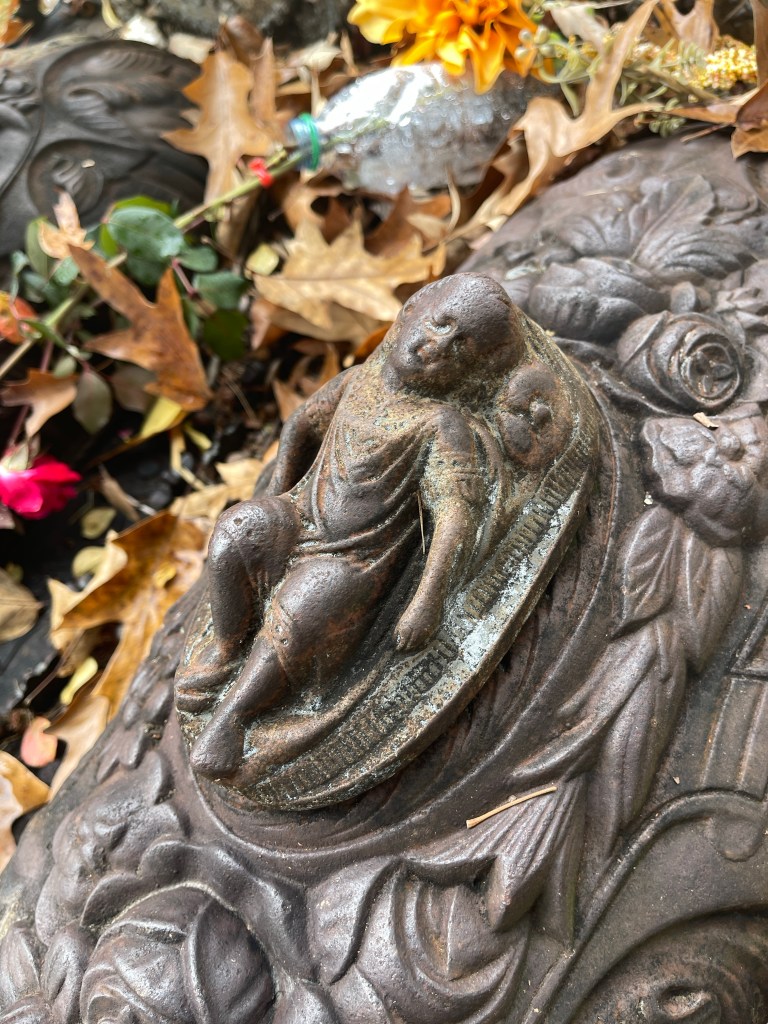
I haven’t had a chance to see the new Frankenstein movie but I’ve heard that lots of people are delighted to learn of the existence of the very real Fisk Coffin. I just love it when there’s a wave of new folks who find beauty in funerary art, and are inspired to become more involved and accepting to the Taphophile community. We all had to start somewhere in our cemetery pursuits and the reintroduction of the Fisk Coffin seems to be a jumping point!
But the Fisk Coffin isn’t the only unique use of cast iron because there’s a lot of different creations lurking out there in burial grounds. Below I’ve shared photographs from my explorations where I came across the metal being utilized in a variety of ways…
Oh, and if you like all things Frankenstein then you might enjoy reading about Knoxville, Tennessee’s own reanimating legend featuring a priest with an unholy obsession for bringing back the dead using electricity.
Fisk Coffins
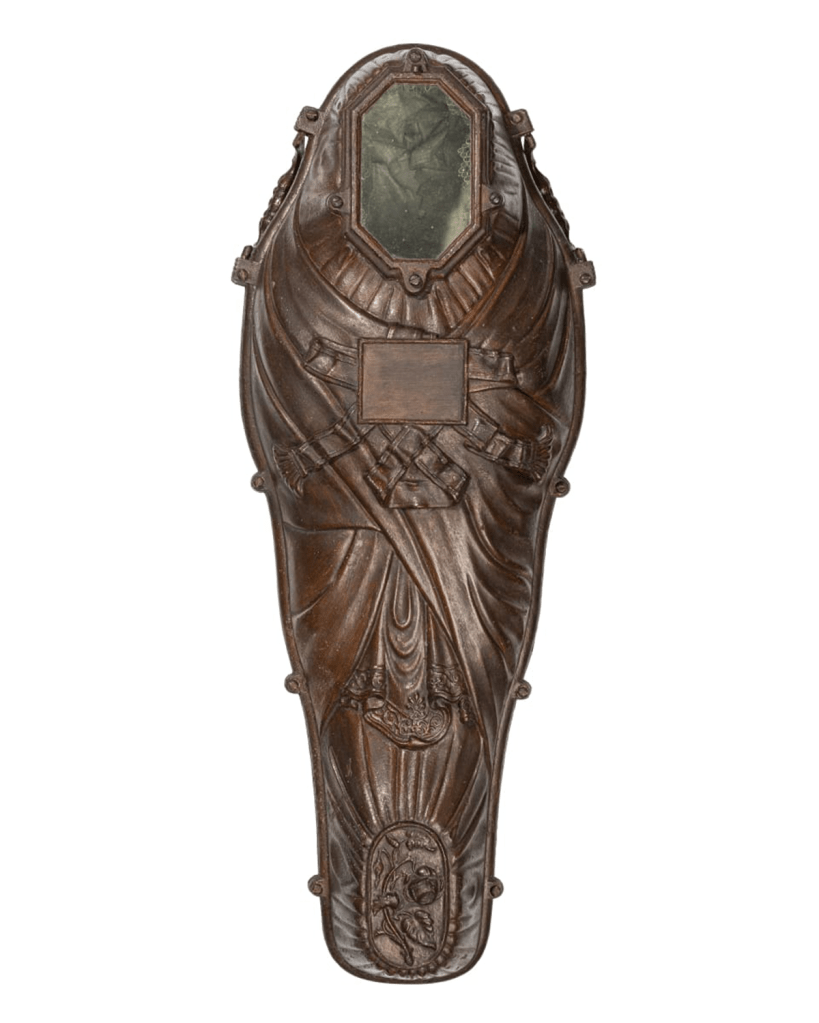
Let’s start it off with the one causing a stir!
As the landscape of early 19th Century America changed, allowing people to explore and live far and wide from their family centers, and before embalming became a thing, the Fisk Coffin was advertised as the solution to preserving a body for long periods of travel as it was sealed tight to slow decomposition. This way someone could be brought to the family burial plot days or even weeks after death. In fact, that was the very reason it was created – Fisk’s brother died and had to buried away from the family plot since it was too far to bring his body home. Especially in a time when cholera was running rampant, could still be contagious from a dead body and people were concerned about the spread of disease.
This is no simple creation. These coffins were designed with the look of a shrouded body (maybe a nod to Egyptomania), had a glass face plate (um, maybe not the best idea) and were adorned with the ornate funerary art motifs common for the era. I think they’re just lovely but some people of the time found them a bit too morbid or realistic.
Obviously this was an item for people with means ($$$). And in that vein, the Fisk Coffin also touted itself as a deterrent to grave robbing, a worry for the wealthy often buried with their valuables.
The demand and production twindled after a few decades and the proverbial ‘nail in the coffin’ came in the 1880’s due to the Civil War and the need for metal.
So much more to know! Read more about them here.
abrams Grave Covers
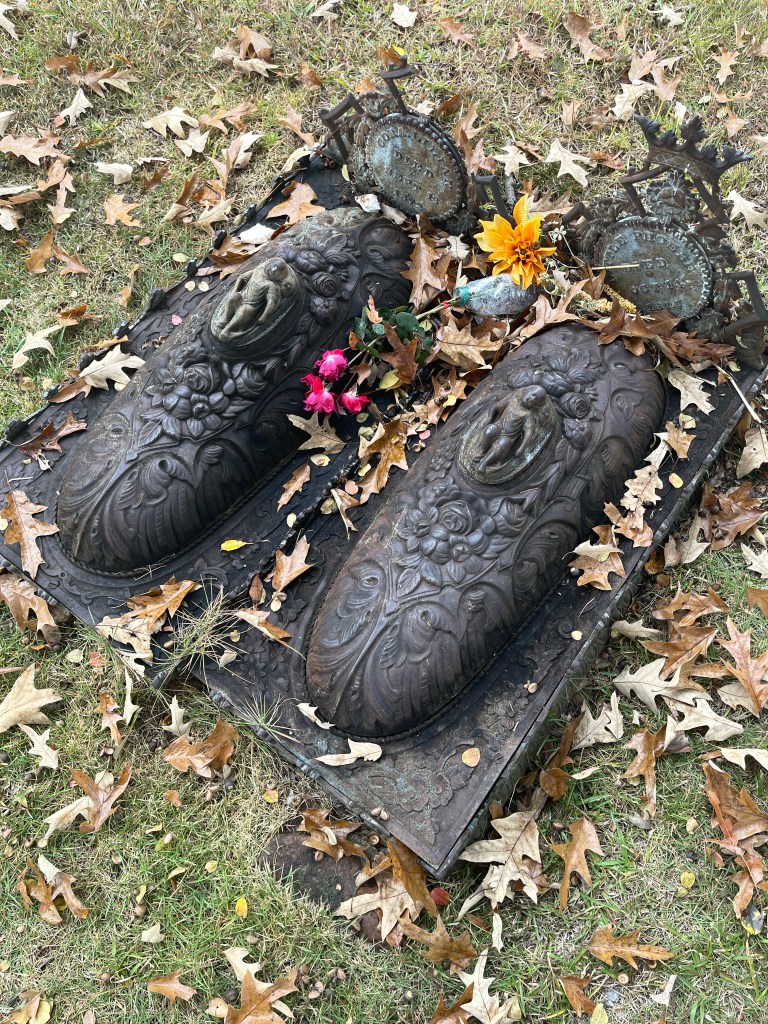
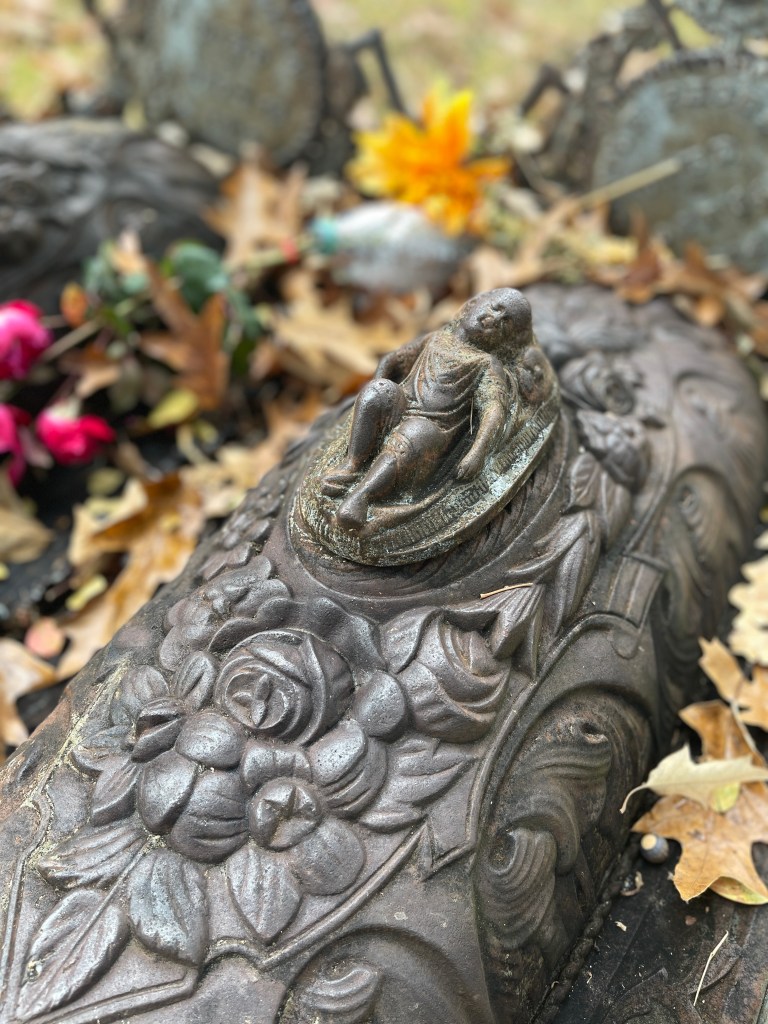
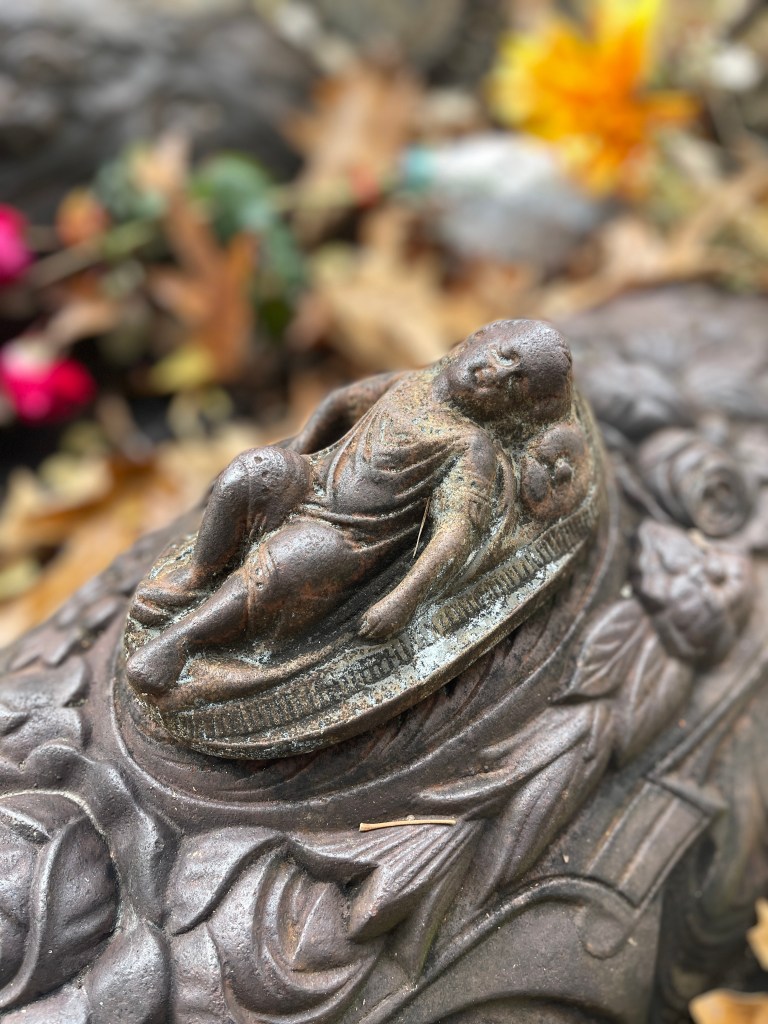
While you don’t find Fisk Coffins out in the wild because of, well, obvious reasons, you might luck upon these cast iron grave covers from time-to-time. A design attributed to Joseph Abrams in the mid-1800’s and found predominantly in the South since Abrams was based in Alabama, these structures not only look beautiful but they also protected mounded graves.
The toppers here are sleeping children because these graves were for 2 young sisters but you can also find embellished vases or crosses.
Headstones & Footstones
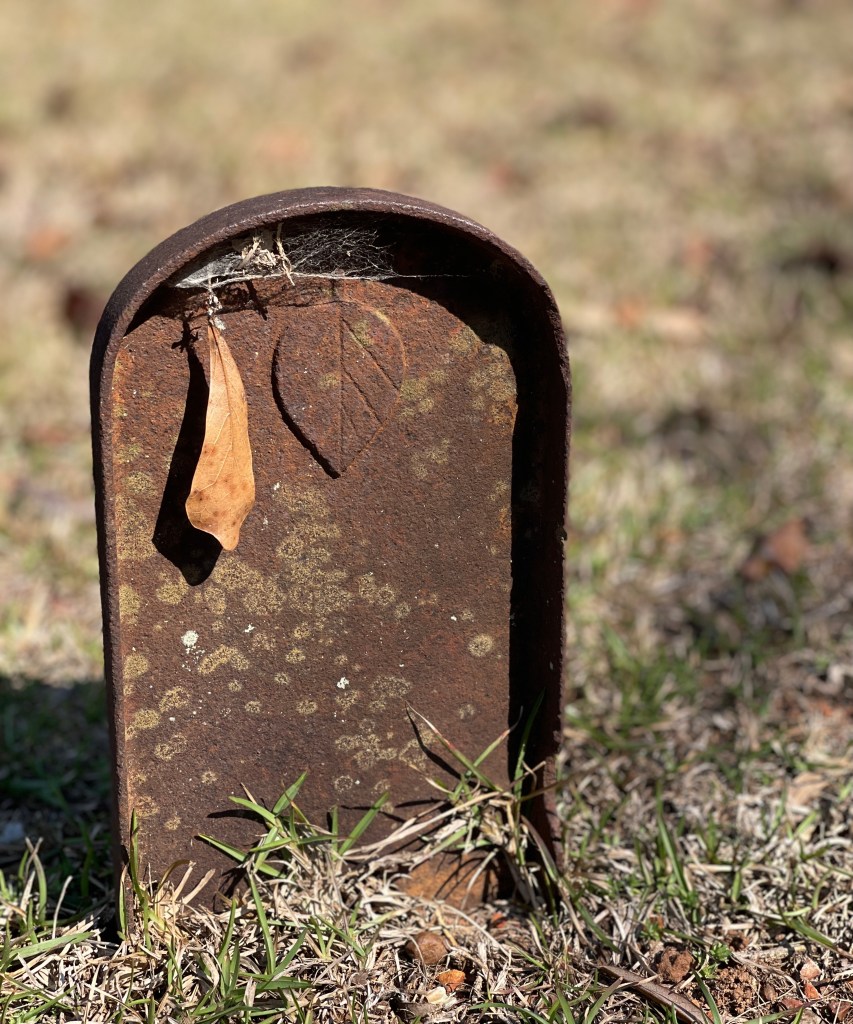
The classic rounded headstone or footstone style was also made of cast iron. I tend to find more of these than all of the other metals items combined, except for fencing, but I have yet to find one that still has intact glass plating for photos or engraved marble slab on the front. Some of these headstones have welded lettering and many have personal touches like the leaf pictured above.
Grave goods

This is the third cast iron pan I’ve run across during my cemetery trips and it feels like a unique example of Southern culture and one that is very personal to family traditions. At least to me because my Nana was always feeding us something she cooked in cast iron.
While this pan was covered in leaves and the vittles were long gone, I’ve found one that was still full of a Sunday dinner that had seen better days. I’ve also found lots of other kitchen-centric cast iron in the form of teapots, stew pots and trivets.
Grave Markers
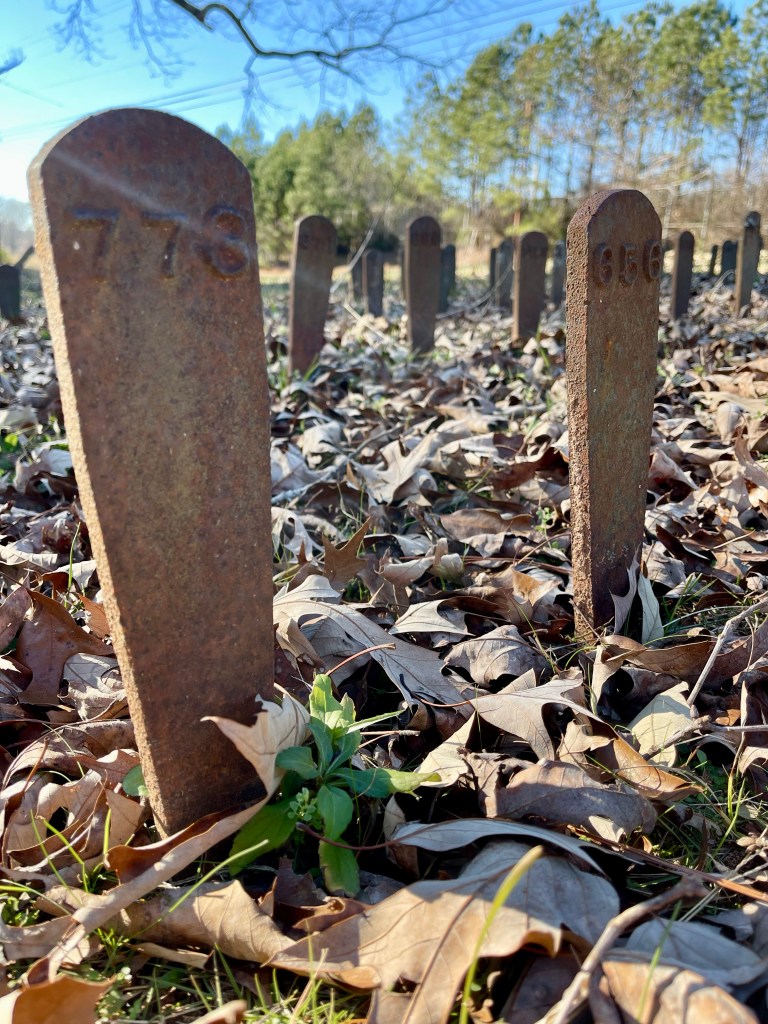
It’s not uncommon for cemeteries to become neglected and/or forgotten, and the records and documentation of those buried within is lost or destroyed. Once a cemetery is restored, there are often monuments or plaques that take the place of headstones that have long since vanished. Or in the case of some cemeteries, like Cedar Lane, cast iron stakes or other implements used to mark the grounds in acknowledgement of those who died.
There are only around 2,000 cast-iron markers to commemorate over 25,000 (known because I’m sure there are many more) patients that were known to buried on the hospital grounds of the now abandoned Central State Mental Hospital. Note: most people were not buried here at Cedar Lane but were ‘relocated’ during an expansion. Each markers bears a number instead of a name since that is how they used to identify individuals during their time at the hospital. Sadly, at one time all of these markers were discarded into nearby woods because they bothered the groundskeepers who were mowing the area. Once the restoration began and the markers were re-discovered, they were placed here in orderly rows.
If you’d like to know more about the abandoned Central State Mental Hospital I did a whole blog post about it. You can find it here. Trigger warning: medical abuse.
(Don’t) Fence Me In
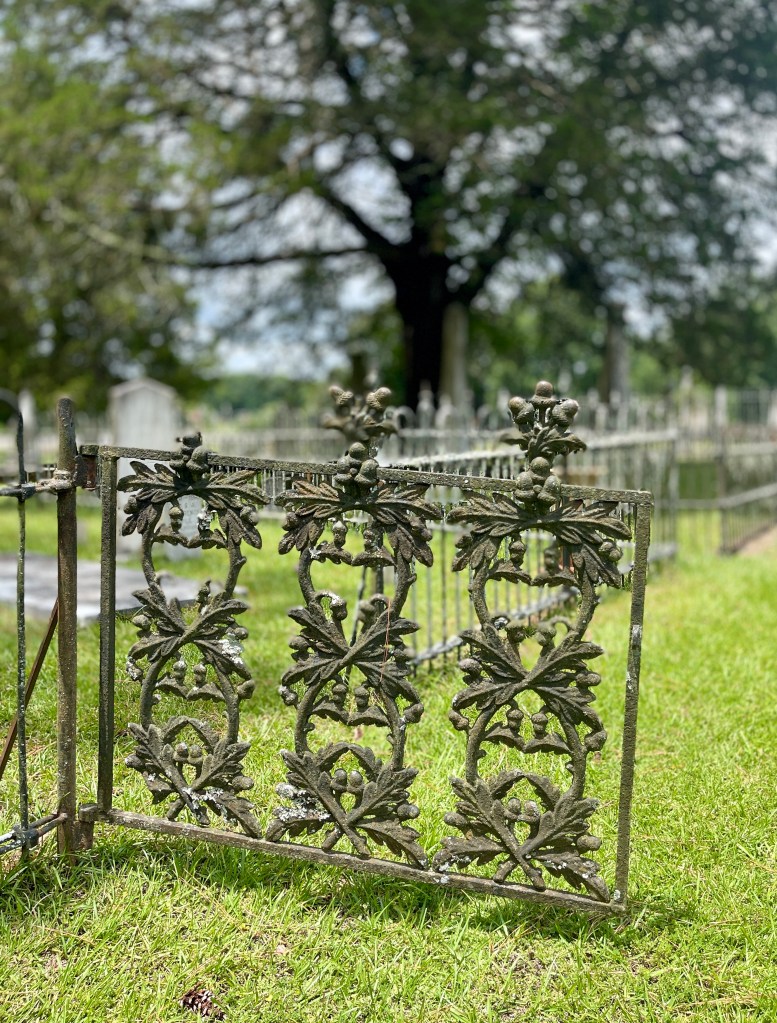
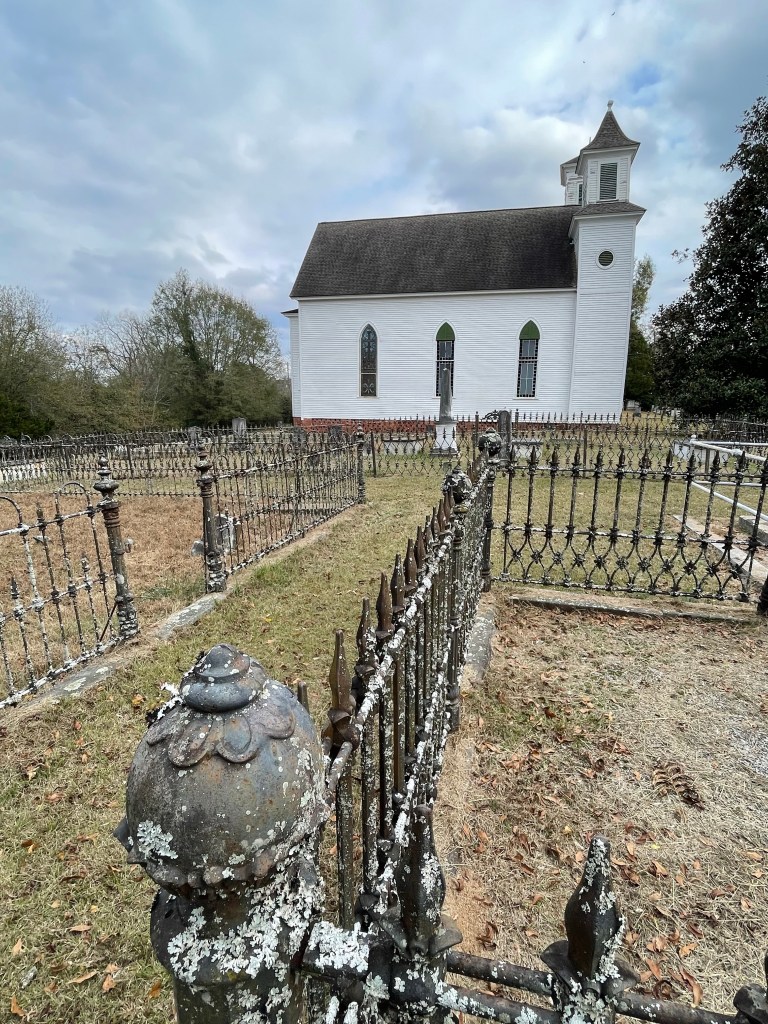
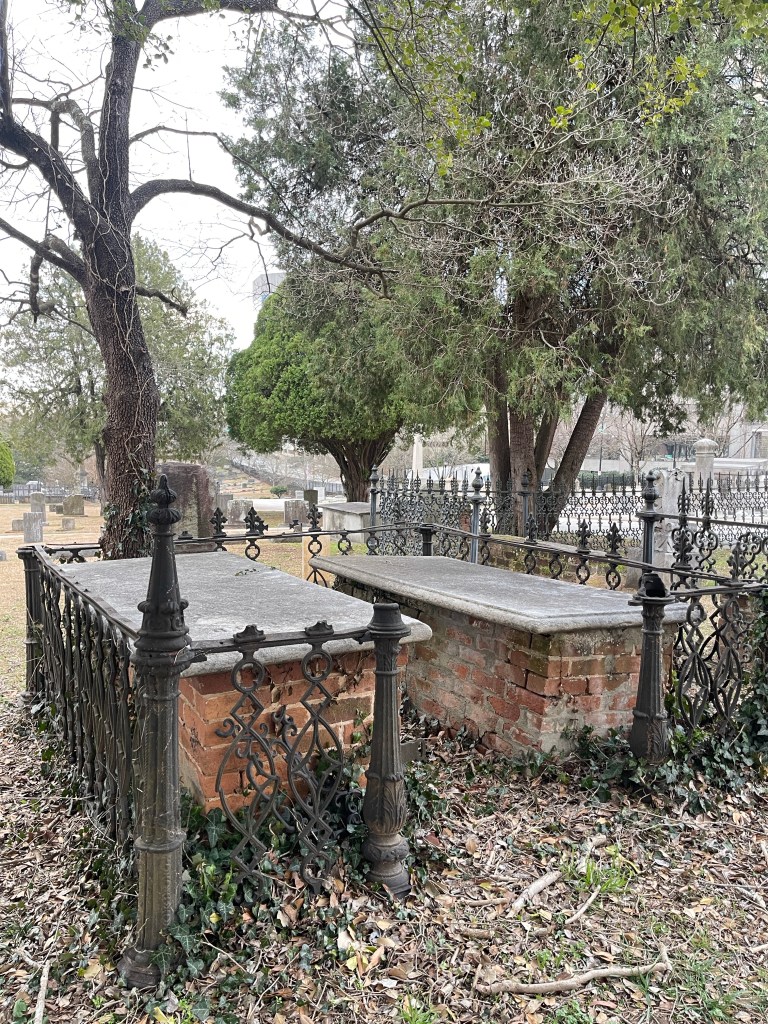
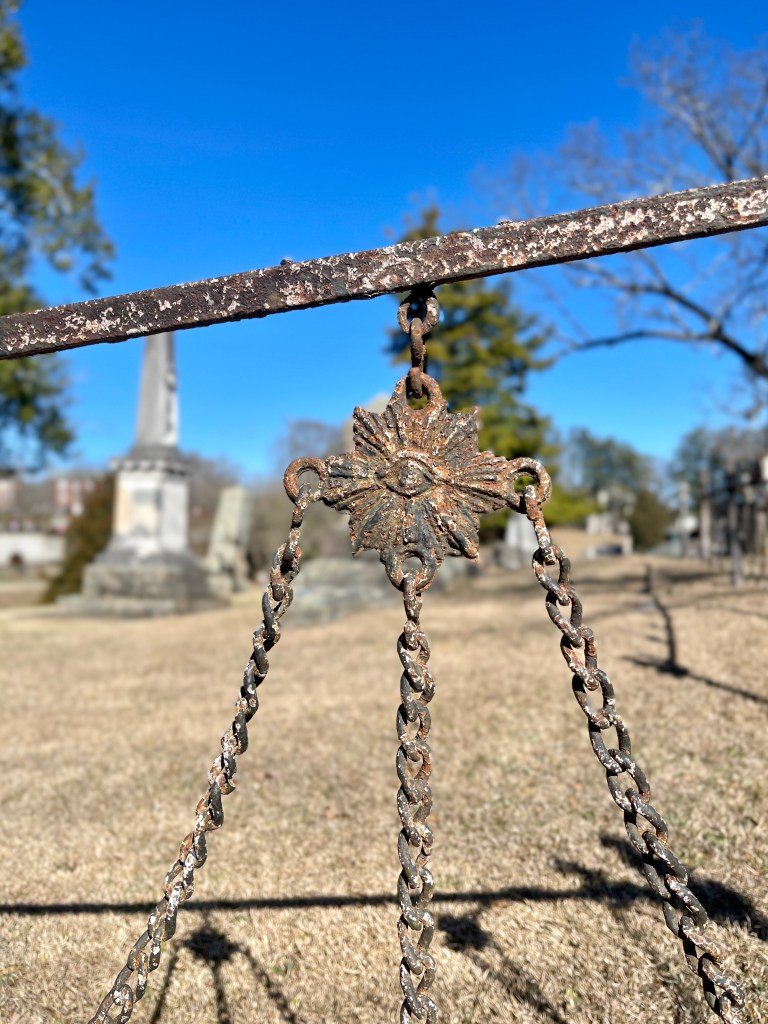
Recently, I was walking around a cemetery with a friend and they wanted to know why on earth do the dead need a fence? And I *love* questions like that because there are so many answers to be had…
For practical reasons, fences kept animals off of and away from graves. Human and non-human alike.
They also marked lines for family plots and, of course, they were a status symbol of the family’s wealth since this stuff wasn’t cheap.
And for those who believed in ghosts and spirits, it’s said that restless earthbound souls can’t cross iron. That’s why you should always close the gate behind you!
You can see more photos of cast iron goodies here plus other unusual cemetery finds such as zinkies and more!
