Dr. Crawford Long is credited with discovery (1842) of ether anesthesia to ease the pain of surgery which is obviously a pretty big deal and a game changer for folks who needed medical care…
The Gravesite

Toward the end of his life Long primarily lived and practiced in Athens so it makes sense that he’s buried in/at Oconee Hill Cemetery along with his wife Amelia, several of their children and one complete stranger.
Amelia died in her early 50’s in a train accident that also injured one of her adult children. Many of the Long children died of natural causes. As per the time and even with a physician parent to help, only 7 of the 12 kids lived past early teen years.
And the mystery man buried alongside the family? According to (living) sources at the cemetery, an artist and avid medical fan of Dr. Long’s work traveled to Athens in order to deliver a painting he’d created in Long’s honor. Tragically, the artist died while visiting in town. Due to the body being far from home, the Long family offered for him to be buried at their plot and the artist’s widow agreed that it would be most fitting.*
The Museum
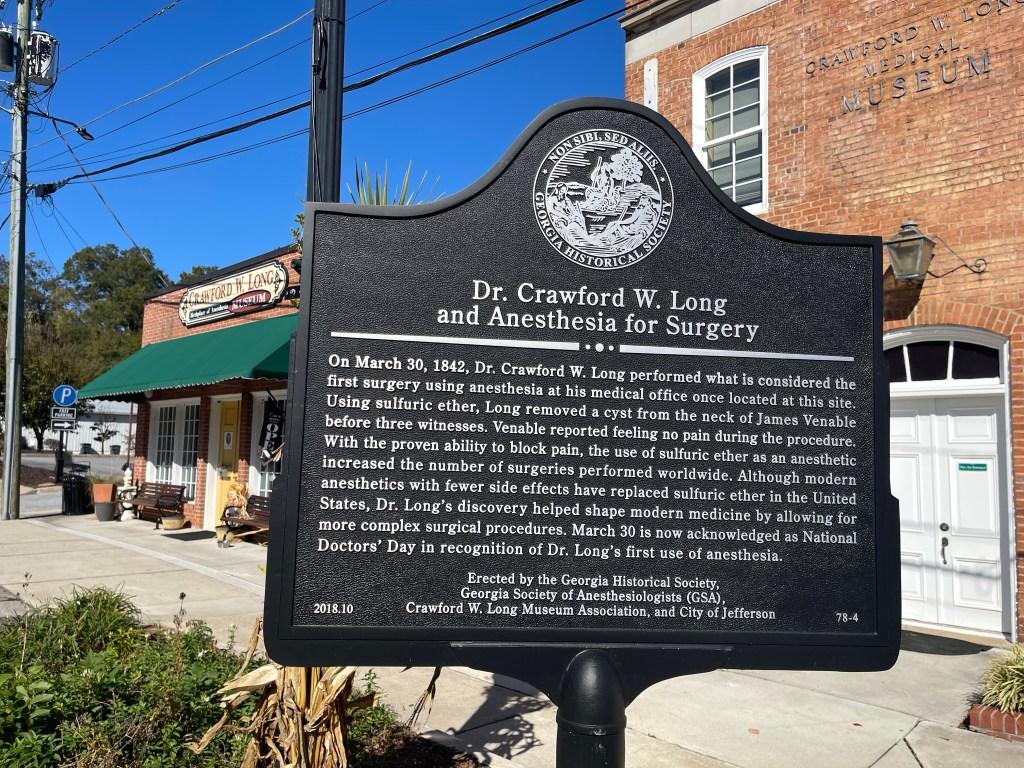
About 25 minutes north of Athens is the small town of Jefferson, Georgia. It’s where Dr. Long first had a practice and first used ether as a surgical tool, and now it’s home to a museum in his honor.

I had no idea it was Long’s 210th birthday until we arrived but what a day to visit! We had free cake, and there were balloons, hats and card making supplies everywhere. So obviously I view my trip through rose colored glasses because it felt incredibly celebratory and festive.

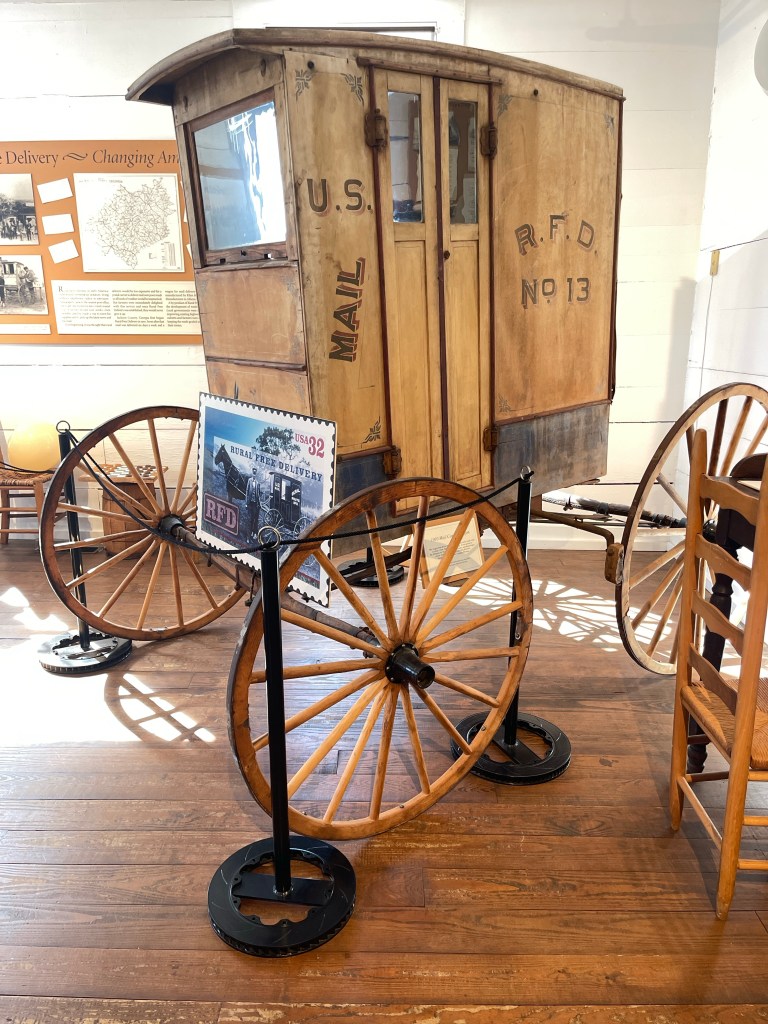


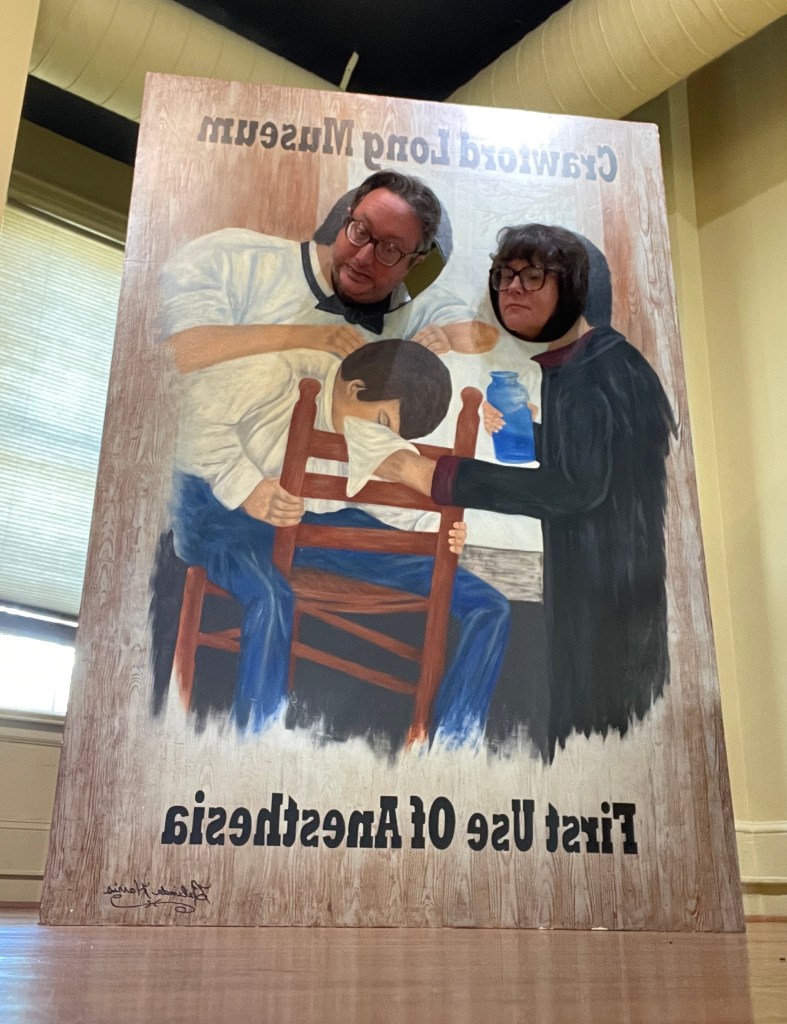


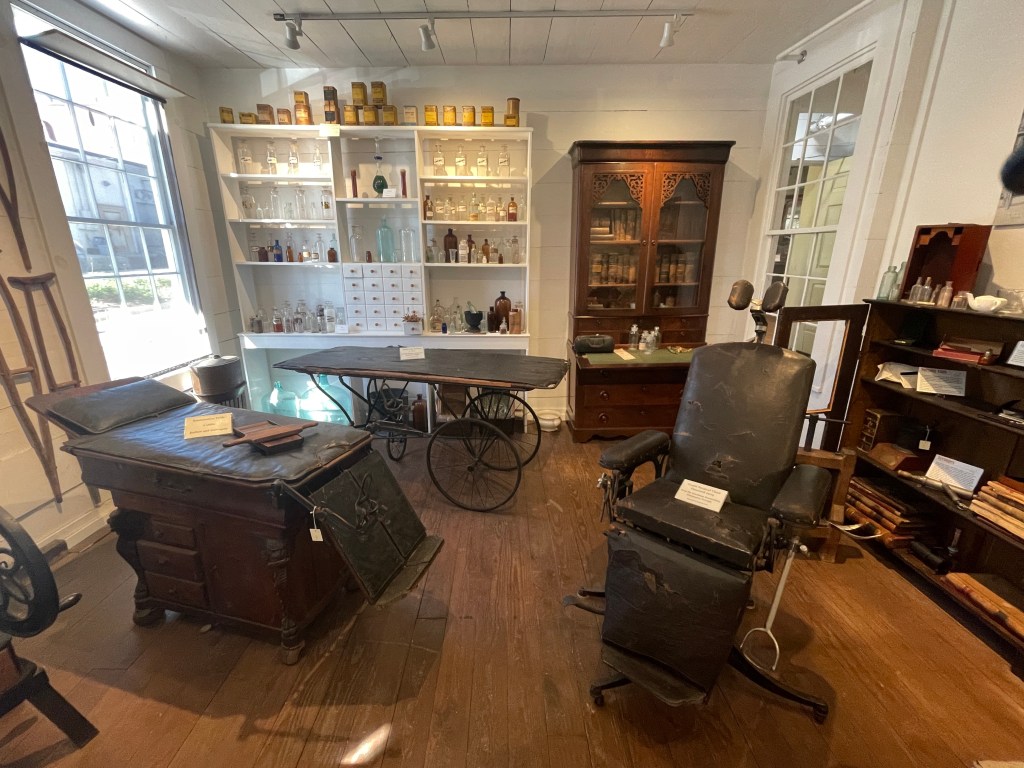
The museum consists of a lot of medical supplies that belonged to Long, a fabulous diorama (I love dioramas so much), more medical supplies from the time period (hope you like medical stuff because it’s here!), some personal items from Long’s family, a historic general store stocked to the gills and a bunch of anesthesia machines on the upper floor. It’s a generous space and meticulously maintained.
For me the most interesting things were seeing how Long discovered ether as a painkiller, how surgery was performed prior to his discovery, how much and how little has changed in medicine since then.
For example, Long had formal training which is something very few doctors did as most received their beginning medical experiences as apprentices. There were eye-catching and stomach clenching medical implements of olde that looked pretty wild and the amount of hard drugs that were used as over the counter remedies? WOW. And don’t get me started on the gynecological instruments featured in one of the displays. *shudder* Ouch.
Speaking of hard drugs, Long figured out the use of ether in medical procedures because he went to an ether frolic. These frolics were the modern day equivalent of a keg party but instead of inhaling beer out of red cups and getting wild these guys were inhaling ether and getting wild. When Long witnessed friends injuring themselves, like falling down stairs and the like, but feeling no pain, he realized that ether had other uses than just a very good time.
Prior to that, surgery was all about being fast as possible while the person remained conscious (no thank you) or using mesmerism to try to relax the patient. Ether sounds like an excellent alternative to both those! I really like this article that goes into more detail about it all.
I also didn’t know about the controversy and long standing challenge of being credited for using ether in surgery. There were several doctors making the claim and the whole situation was very complicated. I’d read this article to get the jest of things…
The museum is open Tuesday through Saturday and costs around $5 per person. Anesthesiologists only pay $3 in a nod to the profession’s lineage. And they do have a small gift shop on premise with LOTS of ether themed items.
DR Long & ‘Doc’ Holliday
A little bit ago I wrote about visiting Griffin, Georgia so that I could find the supposed grave of Doc Holliday and his father Henry (that legend’s truth is thin as a spider’s web but it’s a redemption story at heart so I’m always a bit hopeful that those are the ones that could be, you know?) as well as the confirmed grave of his sister. You can read about that travel experience here.
And I know I’ve mentioned before that I lived in Valdosta, Georgia for over a decade and that’s where Doc’s mother Alice, father Henry (mayyybe) and his stepmother are all buried. There’s a lot of history there for the Holliday family since Henry was the Mayor of the city for years and their home is still standing to this day, albeit in a new location. It goes without saying that if you live in the city long enough then you’ll hear a story or two…
So, as you can imagine, my ears perked up when I was at the Crawford Long museum and heard that he was related to Doc Holliday! Turns out they were first cousins on his father’s side.
And there’s a story that Long actually helped operate on Doc’s cleft palate and that Doc was the first case of ether used on an infant during surgery. While it’s most certainly true that Doc had surgery, and in fact he eventually grew out his famous mustache to cover the scar, there’s not much proof that Long was involved other than a wife of a 2nd cousin wrote about it in a letter to friends. A letter that hasn’t been unearthed again. Add that story to the list of Holliday stories and legends that haven’t been verified but sounds like something you’d hope was true…
*I took the photo of Crawford Long’s grave while on a historical tour of the cemetery and neglected to get the mystery man’s name while I was there, hence the title mystery man but next time I’m there I’ll be sure to snap a photo.
