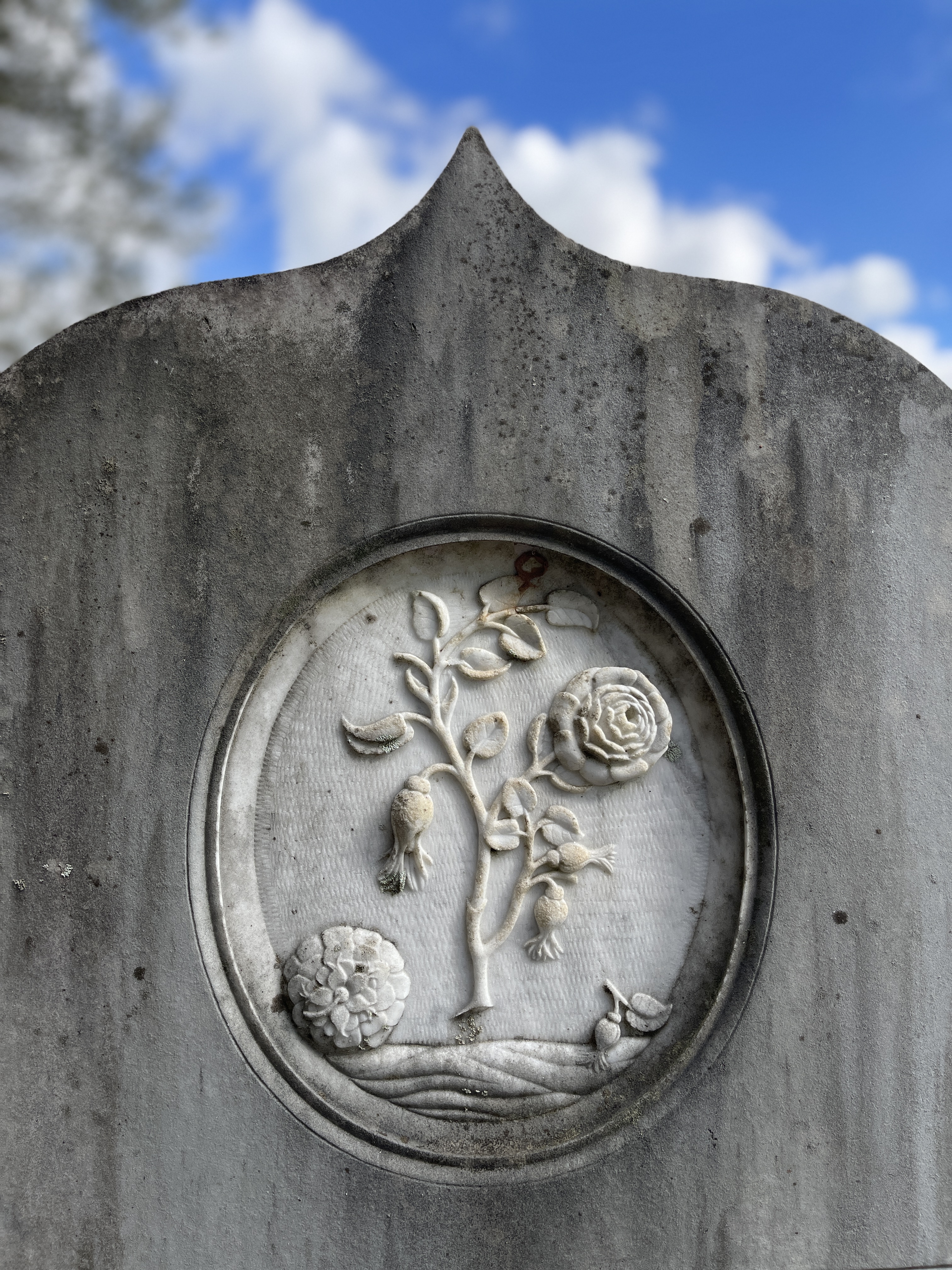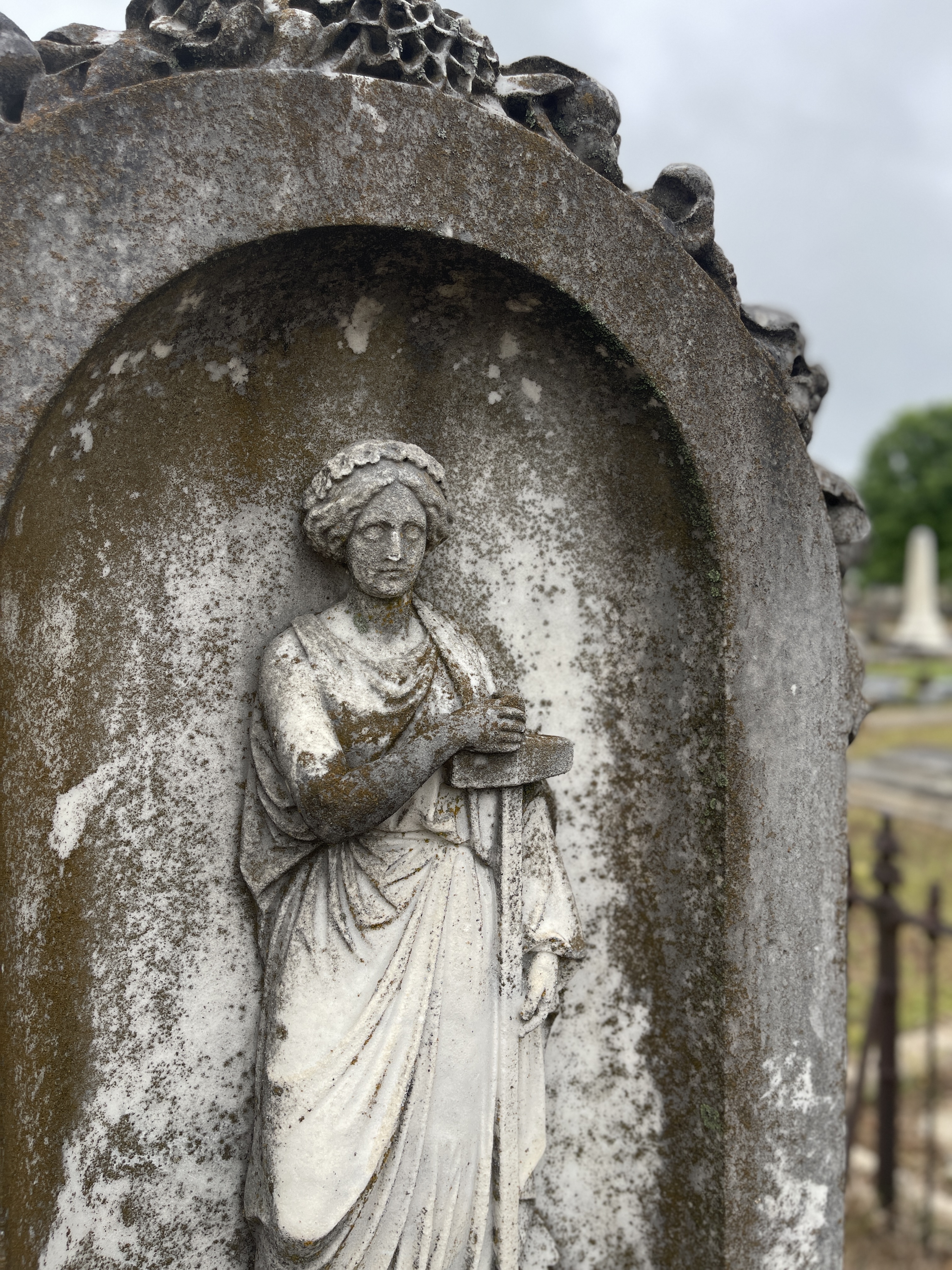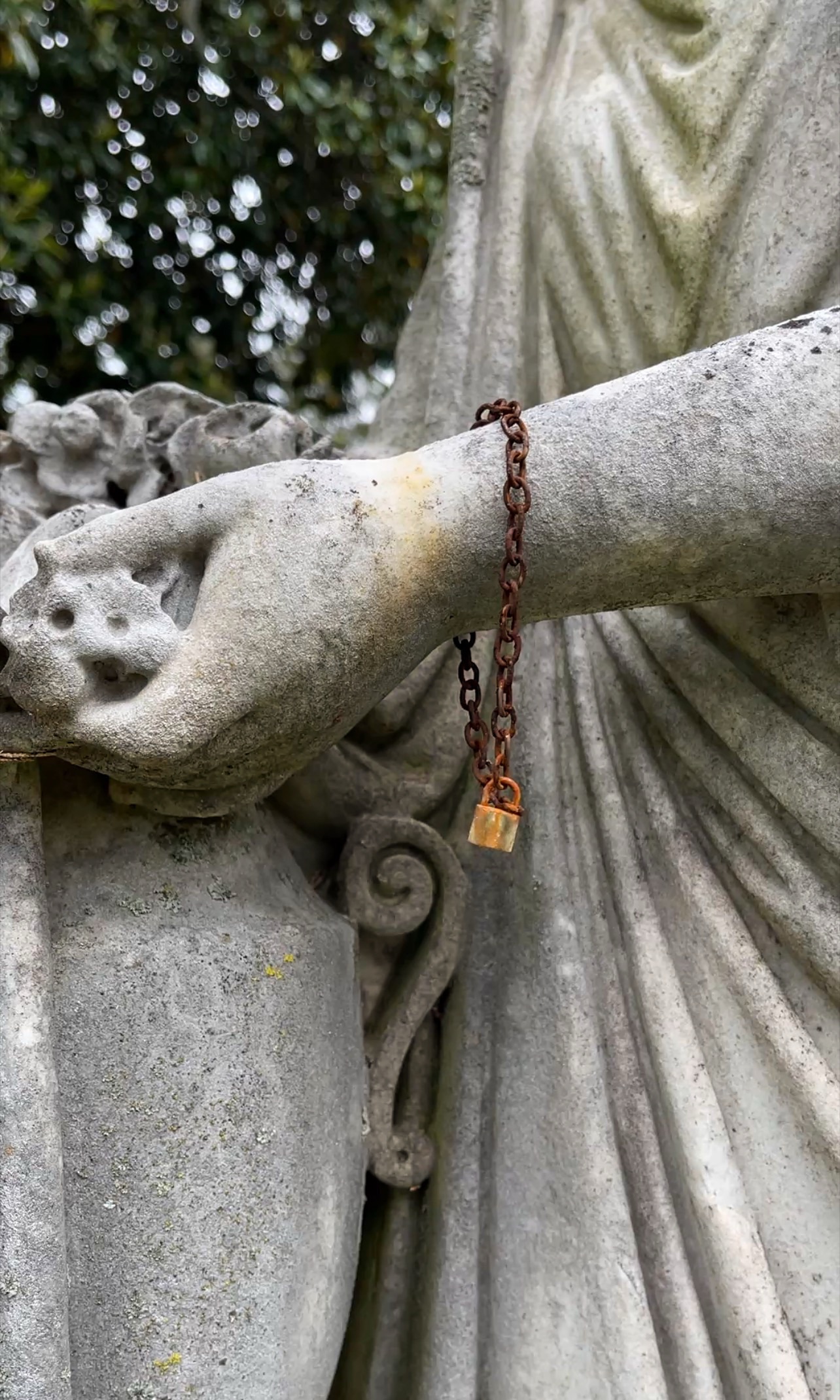
My fascination with grave goods has not waned one bit over the years I’ve been cemetery exploring (if anything, it’s only grown) so when I was on a recent trip for a grave cleaning class and I found this lovely monument with a tiny lock and chain of the wrist, well, I had to know more. While I’m not 100% sure what the meaning behind it was for the giver in this particular circumstance, I started researching the connection of locks + chains with burials and superstitions, and wow did I fall down a rabbit hole of interesting things.


Marietta City Cemetery in Marietta, Georgia
So both real and symbolic locks and chains have been used in burial rites dating back to the Vikings, and were most often used as an apotropaic object. Apotropaic describes rituals, items or symbols designed to ward off evil, misfortune or supernatural harm. Knocking on wood is one example. Forking the evil eye, planting specific herbs by your gate, horseshoes over the door, haint blue ceilings and bottle trees are other. The list goes on!
For this particular imagery they are designed to bind, entrap or turn away malevolent spirits, evil influences or bad luck. The thought is that a locked chain acts as an endless line or inescapable trap for a spirit much like the ancient symbol of a Solomon’s knot.

This ‘all seeing eye’ link fence can be found at Oconee Hill Cemetery in Athens, Georgia. It’s said that metal fences protected the graves from cattle, added flair, displayed status & wealth, and were to keep spirits from wandering about…
Ready for spooky stuff? Locks and chain have also been used in funerary rituals to secure the deceased to prevent them from rising (vampire/supernatural protection) or another ritualistic manners such as during a human sacrifice.
Some of the most famous stories involve placing a lock on a toe or a neck with the padlock acting as a symbolic seal ensuring the dead stayed buried. Such instances are seen in the archeological find of 17th century burials with the infamous ‘Zosia’ (who also had a sickle over her neck) and with the vampire child who also buried face down in their grave.
Alternatively these images were used in stone carvings or fencing – the latter is often without the lock but with the same idea otherwise, which is to keep spirits out or in.

Found at Oak Grove Cemetery in St. Marys, Georgia.
One such link lore on a gravestone is that of Floyd Pruett (1894-1920) of Indiana.

Memory Hill Cemetery in Milledgeville, Georgia.
Of course, this doesn’t apply to all images involving chains or locks. For example, in the Victorian era of funerary art you’ll read that broken links were symbolic of the chain of life. And the three links on the metal stand above are indicative of The Independent Order of Odd Fellows which promotes personal and social development, with a focus on charity, and is non-political and non-sectarian.
I’m trying to find a copy of The Materiality of Magic: An artifactual investigation into ritual practices and popular beliefs to read up more on this.
Disclaimer: this is a very general coverage of the topic. Please feel free to research further!