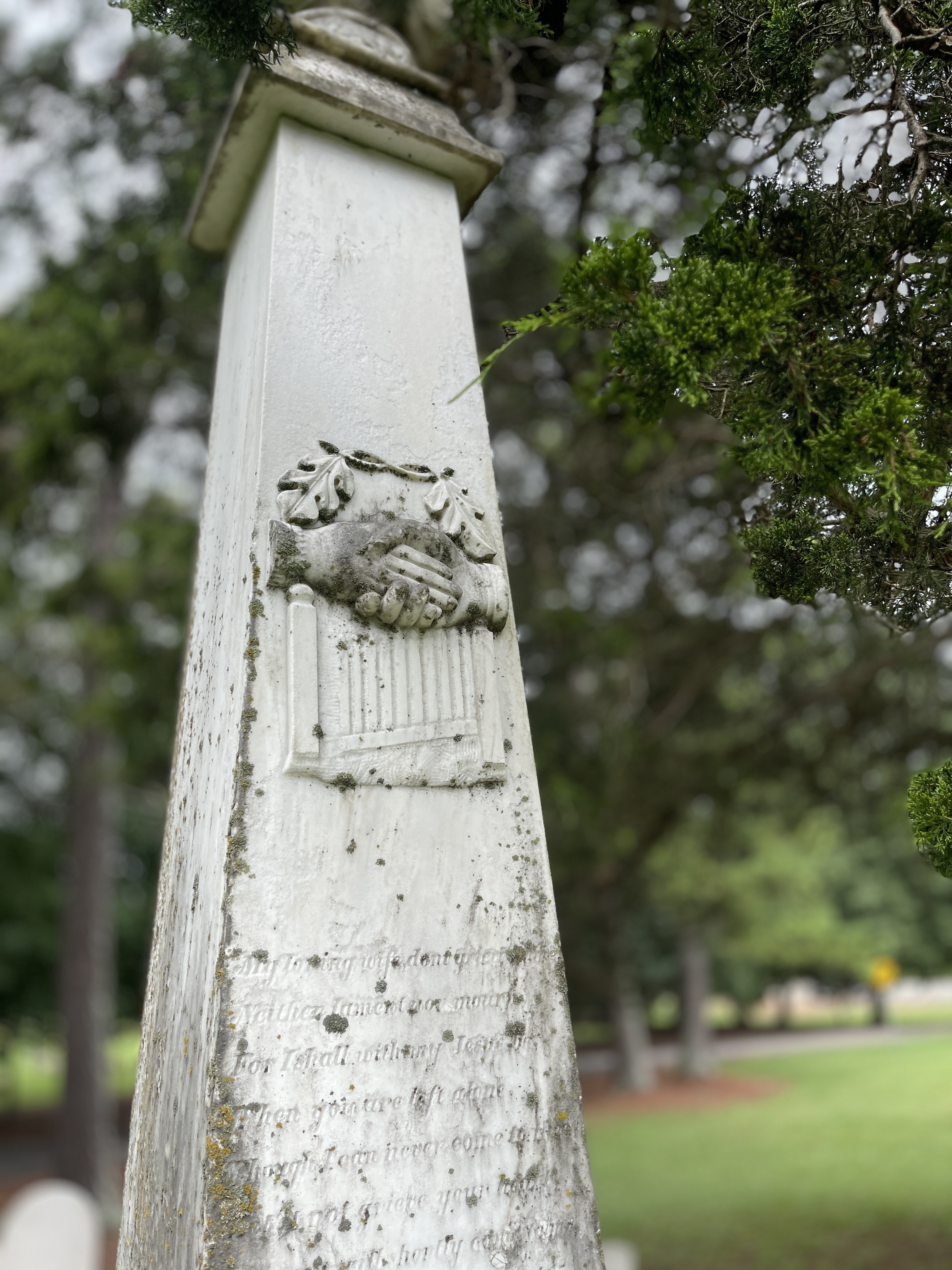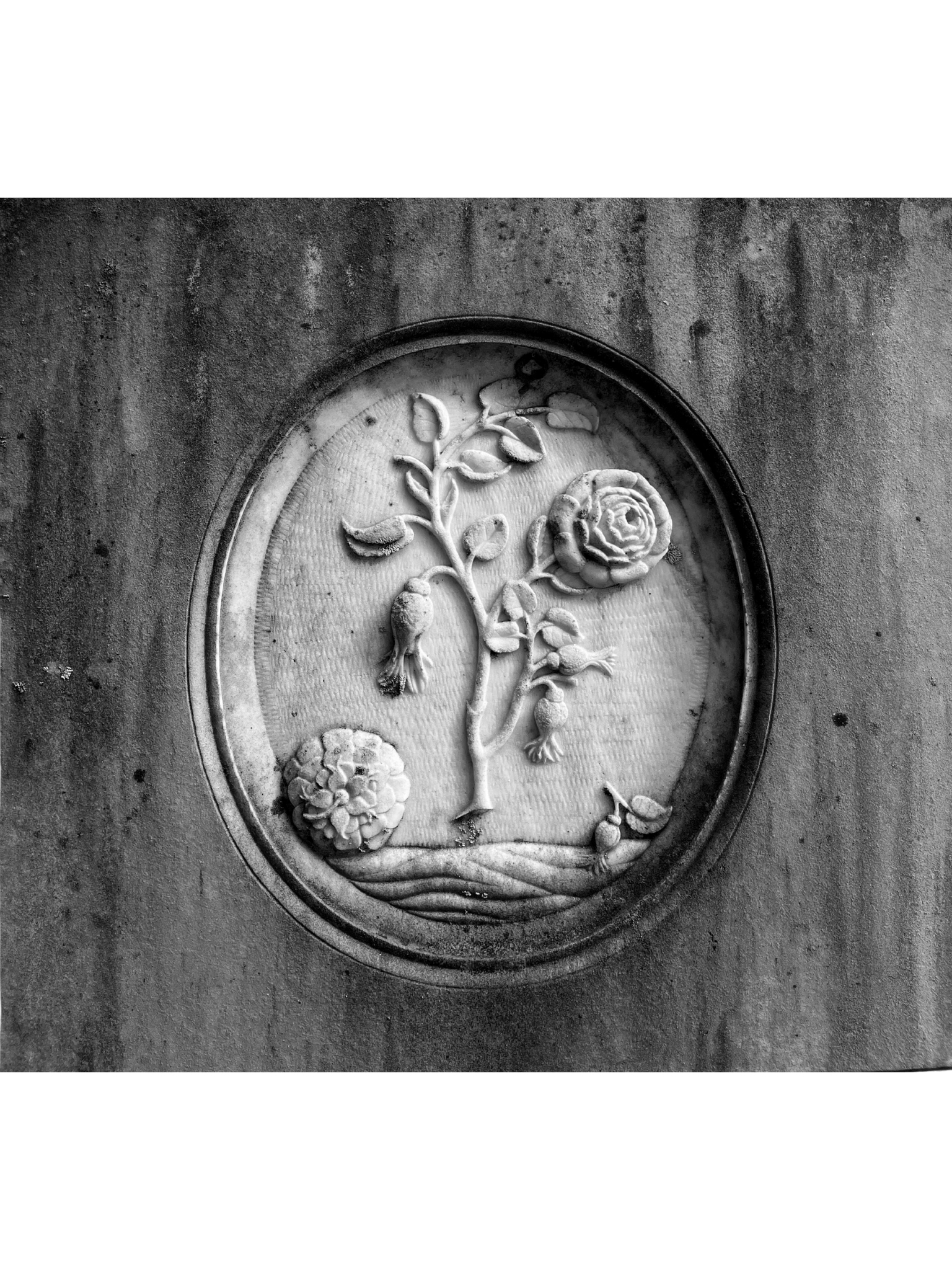
According to the cemetery’s official website:
Colonial Park Cemetery served as Savannah’s cemetery for more than a century and contains over nine thousand graves. Established in 1750, by 1789 it had been expanded three times to reach its current size. Colonial Park Cemetery is approximately 6 acres in size and is located in the heart of Savannah’s Historic District. The cemetery is open to pedestrians from 8:00 a.m. to 5:00 p.m. November – March and 8:00 a.m. to 8:00 p.m. March – November, and is a popular site for local citizens and tourists. The park-like cemetery has been closed to interments since 1853 and is the oldest intact municipal cemetery in Savannah. Previously known as the Old Cemetery, Old Brick Graveyard, South Broad Street Cemetery, or Christ Church Cemetery, the cemetery served as the primary public cemetery from 1750 to 1853.


As a Revolutionary War cemetery you’ll find that many of the interred are settler-colonialism figures, the most famous of which is Button Gwinnett. [What a name!] One of the signers of the Declaration of Independence for Georgia, he famously died after a duel with his political rival, Lachlan McIntosh. McIntosh is also buried within.

There is an area of mostly unmarked graves noted as a burial ground for many who lost their lives to epidemics.
With all of that history, tragedy and age (and I haven’t even gotten to the wall and vandalism yet!) it’s only natural that this spot was/is considered to be haunted as hell. Voices, figures and more, they’ve been seen and heard by generations. Some of the more common involve yellow fever coma victims being buried alive (these types of stories led to the invention of the grave bell which I wrote about here [scroll down a bit when you click the link]), the folktale of Rene Rondolier: “The Hanging Tree” Ghost, and the ‘jumping boy.’
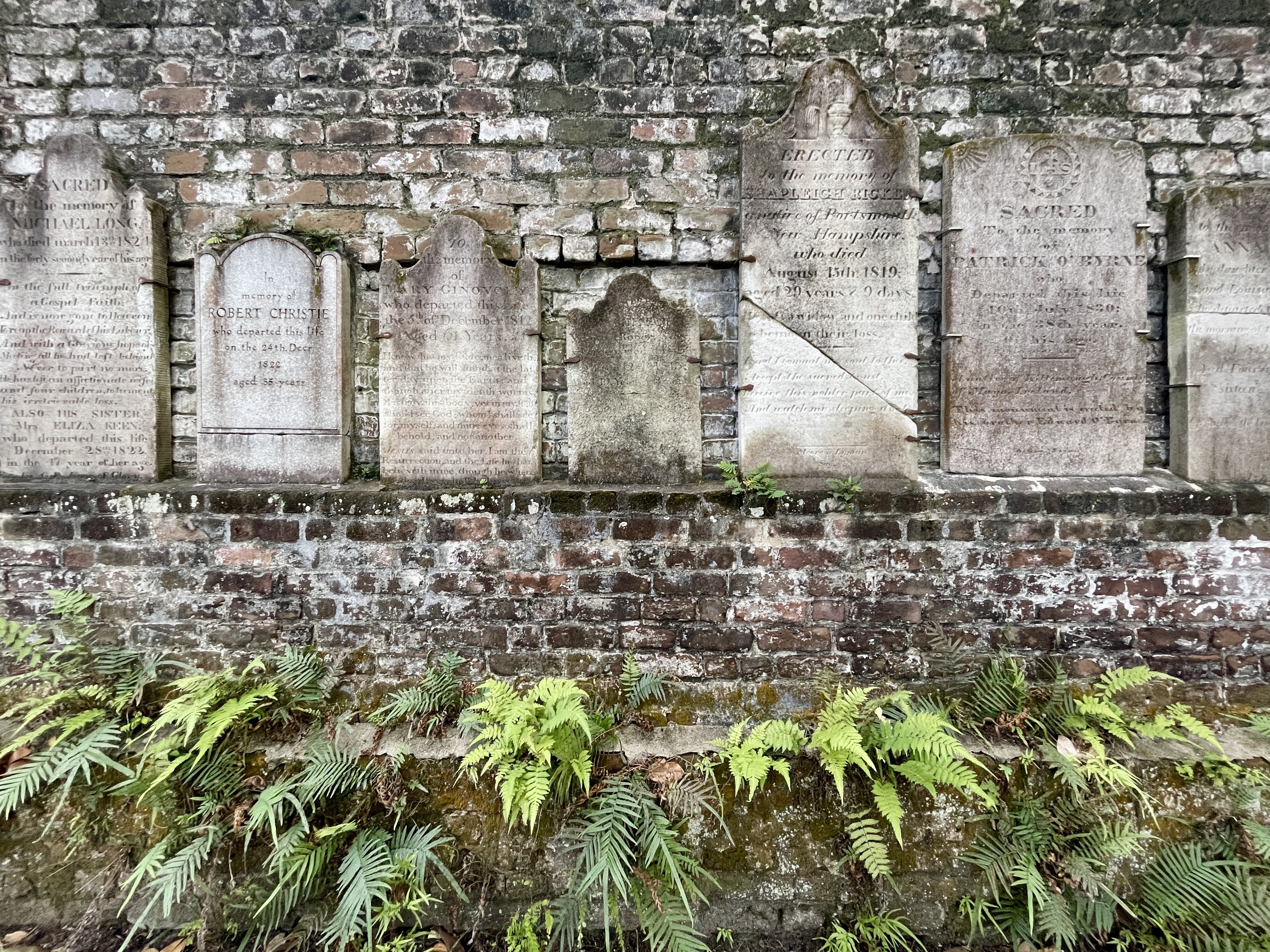
Moving on and shaking off that chill from the ghostly tales, let’s talk about one of the most photographed and discussed areas of the cemetery – the wall of gravestones.
The cemetery had eventually fallen to disrepair and a good deal of the original brick fencing had been damaged or stolen. During the repair it was decided that the scattered headstones, many of which were broken and removed from their original spots, would make a fine addition to the repaired structure. You can walk along that specific length of the cemetery and see dozens and dozens.
And if you look closely you’ll see that some of them have altered dates and names. The rumor is that Union soldiers did this vandalism and damage when they were camped in the area during the Civil War. Considering the Union was blamed for a lot of things over the years, and for some they are still to this day *sigh*, I don’t know if the story is true or not but it tracks for the area. There’s also a green mist that’s sighted on occasion that is supposedly the angry spirits making their disdain known re: this nonsense.
The one thing I really regret not photographing was the grave of the well known and highly lauded miniaturist Edward Greene Malbone. He is considered one of the finest and most sought after during his time but succumbed to tuberculosis during his travels in 1807 at the young age of 29. You can see a number of his works at this Smithsonian art site.
If you’re near downtown Savannah then I highly recommend a visit to this location. There are private tour companies that you can book but they do close the gates at night so any of the more atmospheric ghostly tales take place outside of the cemetery.