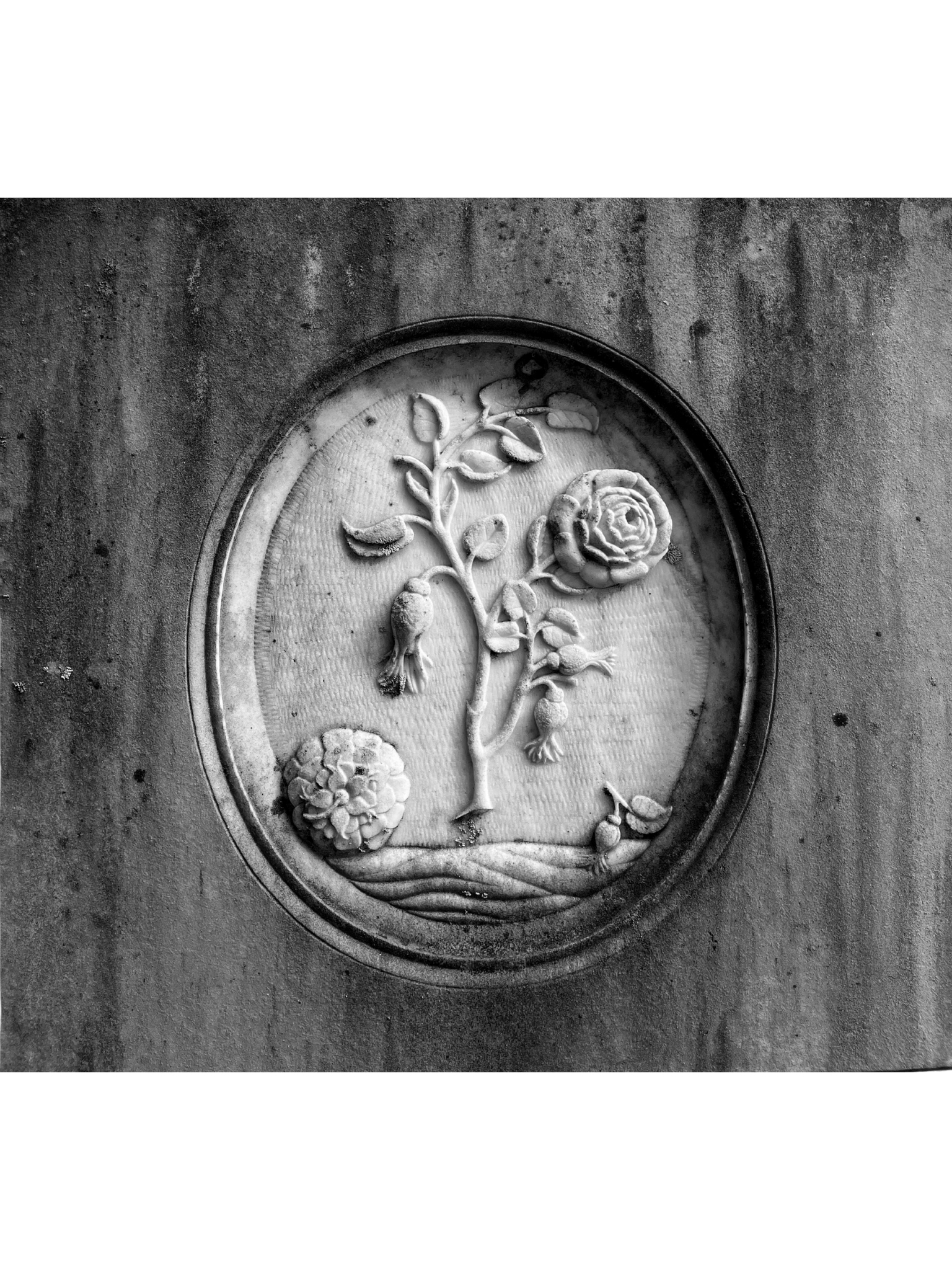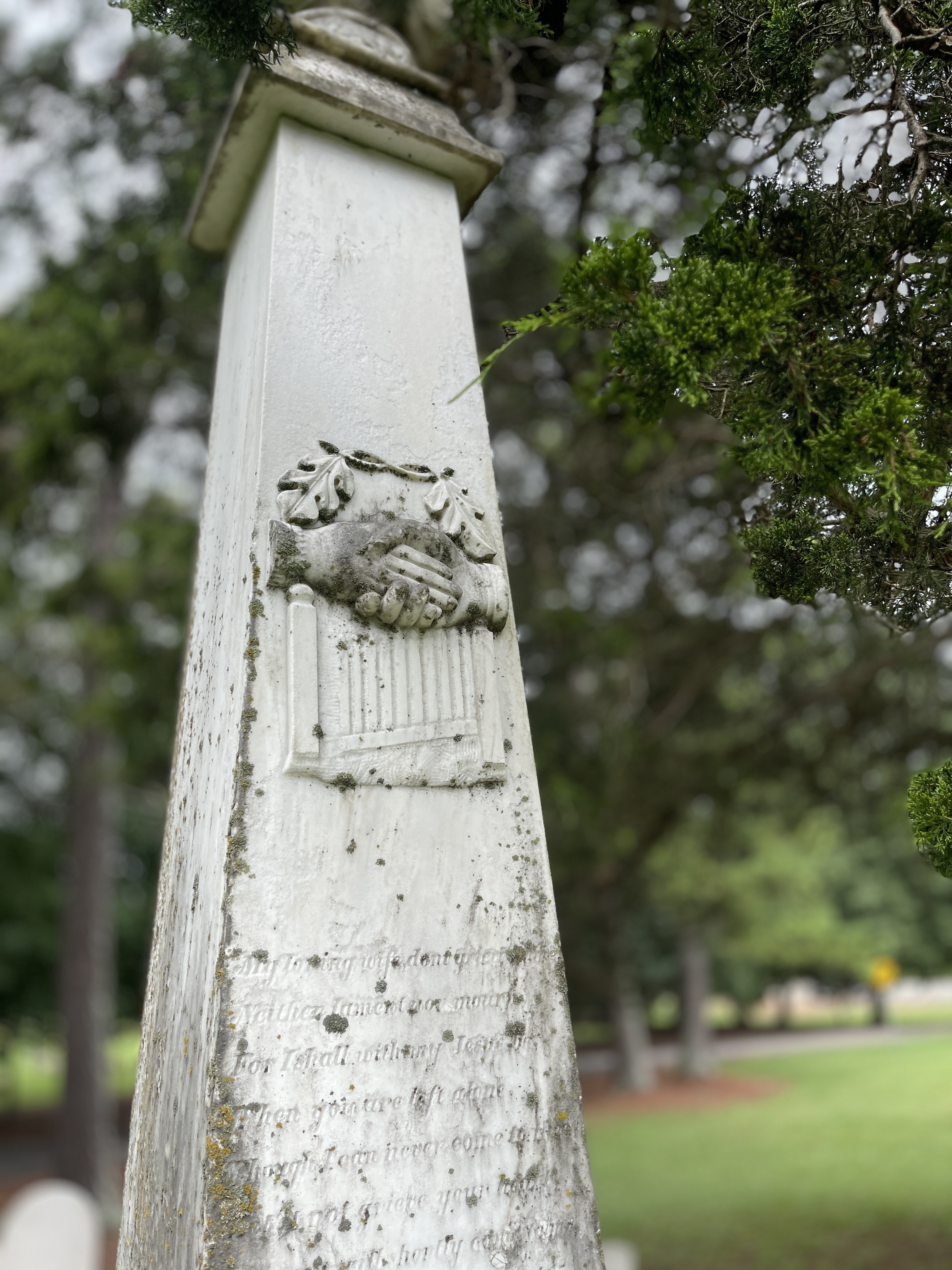
Technically there are three different cemeteries divided from this one section of town – Old, New & Fairview. Before I dive into the Old Cemetery let me give you the rundown of how this large and intertwined section of land connects it all together.
For the Old Cemetery, the upper section comprised of Madison’s middle class and elite, and the lower section primarily burials of former slaves. Most of the burials here face east. The first building of Madison’s Episcopal Church of the Advent stood on the property near the entrance from 1853 to 1940.
With the Old Cemetery “rapidly…being filled up,” in the early 1880s the City acquired 10 acres across the tracks for the New Cemetery. First, the remains of 54 Civil War dead were re-interred as a group closer to the tracks. Then the remaining land was segregated and a tiny portion allotted for a Potter’s field.
Fairview Cemetery, an eight-acre tract, was purchased by the City in 1926. Divided from New Cemetery by a ravine, Fairview was chartered in
1904 as a perpetual care cemetery. [source]*

In 2014 the city acquired acreage abutting Fairview Cemetery for expansion and it is the city’s first integrated cemetery.
Returning back to Old Cemetery, it’s where the majority of the more ornate and surviving structures are located. Research has uncovered 17 different sculptor marker including two pieces created by Robert E. Launitz of New York.


This piece is one of them and isn’t it something? So. Much. Symbolism. Known as the “father of monumental art in America,” Launitz created a number of recognizable sculptures including the Pulaski monument in Savannah and a large installation at the Washington Monument.


This is one of my top 5 ‘angels carrying people away‘ gravestones [I should really do a post featuring those and some of my favorite epitaphs…hmmm] and it never fails to make me have all the feels. Where many angels look up towards heaven this one is so sweetly snuggling Little Willy. Also note the thistles which are a common image found in funerary art within this particular cemetery.

Case in point – this thistle themed fence gate. There is a lot of iron work scattered about including several pieces by the Wood & Perot Ornamental Iron Works of Philadelphia. They were famous for funerary art, especially their cornstalk fencing, and operated a factory out of New Orleans as well Philly. They went bankrupt in 1878 after a short but successful run…

The Broughton-Sanders home is still standing. In fact, a large number of homes in this city famously survived the Civil War because influential pro-Union U.S. Senator Joshua Hill. Hill, who is buried here in this section but not pictured [a big miss on my part], negotiated an agreement with General Sherman to spare the town’s residences, leaving nearly 100 intact antebellum and Victorian structures. As you can imagine, the Madison Tour of Homes is STELLAR. Their holiday one is especially beautiful…


On the subject of iron aka heavy metal, this is the only cast iron grave in all of the cemeteries. It belongs to a young woman named Tabitha Wilson.
Overall, this part of the cemetery has a bit of diversity in regards to backgrounds – there are Unionists [see above] buried near plantation owners buried near Revolutionary War heroes and everything in between…including spiritualists!

I wrote about Lulu Hurst, also known as the original Georgia Wonder, in a post about Odd History: The Georgia Wonders. Born 1869, struck by lightning in 1882 and already touring in 1883, “Laughing Lulu” was known not only for her ability of moving objects but also for her feats of seemingly unnatural strength.
When Lulu took to the stage it appeared as of it chairs, canes and umbrellas could levitate and dance in her presence, seemingly propelled by an unseen force with just a touch.
Her most startling performances involved a volunteer, often a strong man, who would hold a cane out in front of him. The moment Lulu laid her hands on it, maintaining balance became a formidable and impossible challenge. Those burly dude volunteers were often pulled around like rag dolls, occasionally ending up on the floor. As you can imagine, this type of act gained Lulu immense popularity throughout Georgia, the south and beyond.
There are more stories to be found and way too many to mention in one post, but you can find them on the guided map here and briefly mentioned in this YouTube video. I can’t wait to discuss notable figures from the other cemetery locations and I’ll feature those in future posts. For now let’s move on to some of the funerary art from the Old Cemetery that caught my eye!


Who doesn’t love the hand imagery? This one has that jagged edging that was extra work.

A leaf and log combo for young Robert. This isn’t a tree stump tombstone I run into a lot and I realllly like the shape.
More nature for you? Look at these uh-may-zing pieces festooned in florals…wow.


Last but not least is the grave of Walter. He has a loyal dog watching over him as he sleeps. My goodness, how sad…
*Please note that the Madison Cemetery Stewardship Commission uses the phrase War Between The States instead of American Civil War in their publications. I do not condone or agree with this usage and will always use Civil War or civil war when referring to that time period.